
This is my in-depth review. For a quicker overview, feel free to skip ahead to my concise version.
The Gibson Les Paul Custom Black Beauty is undeniably one of the most stunning guitars ever, but its $5,500 price tag makes it exclusive. Up until now, only a select few could afford this opulent and luxurious guitar. Enter the Epiphone Les Paul Custom Ebony, a much more accessible option that retains the style and elegance of high-end Gibsons without the hefty cost. This guitar captures the essence of the original while keeping things wallet-friendly. Let’s explore why the Epiphone Les Paul Custom could be your gateway to iconic design and quality craftsmanship.
Epiphone to the Rescue
I was on the hunt for that classic Les Paul feel and tried out a few Gibsons, but they were well beyond my budget. I then explored several Epiphone Les Paul Standard models, but the quality just didn’t impress me. Noticing my hesitation, the store associate suggested another Les Paul variant from the back. When he unboxed it, even he was amazed, saying, “Wow! This is one stunning guitar!” It looked incredible, felt fantastic to play, and had that signature Les Paul sound. I knew immediately—it had to come home with me.

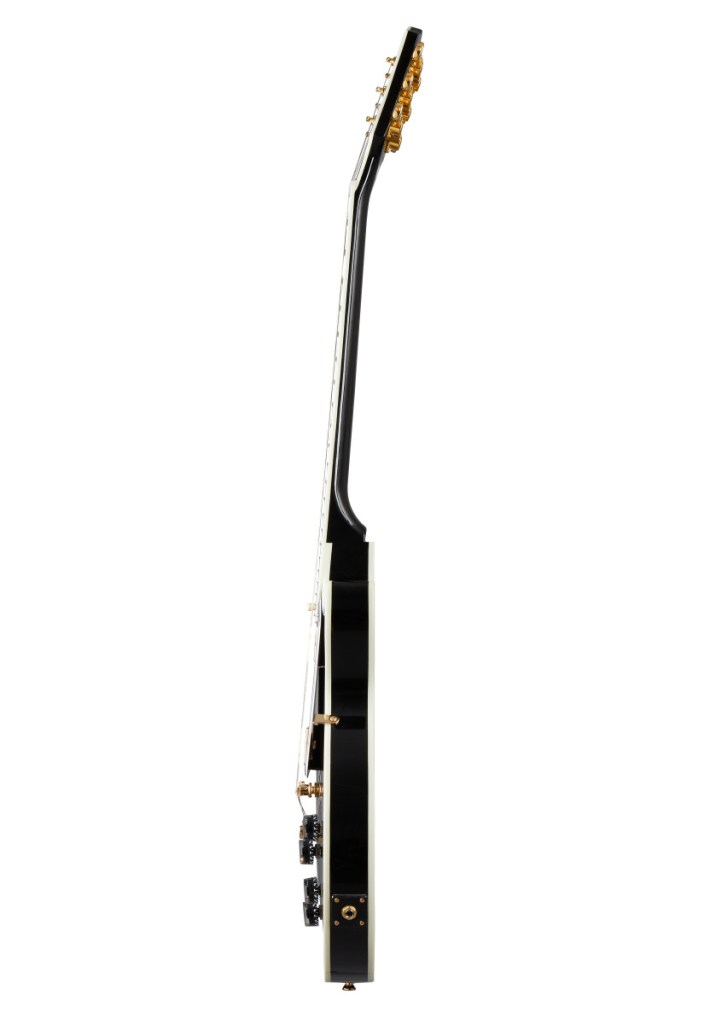
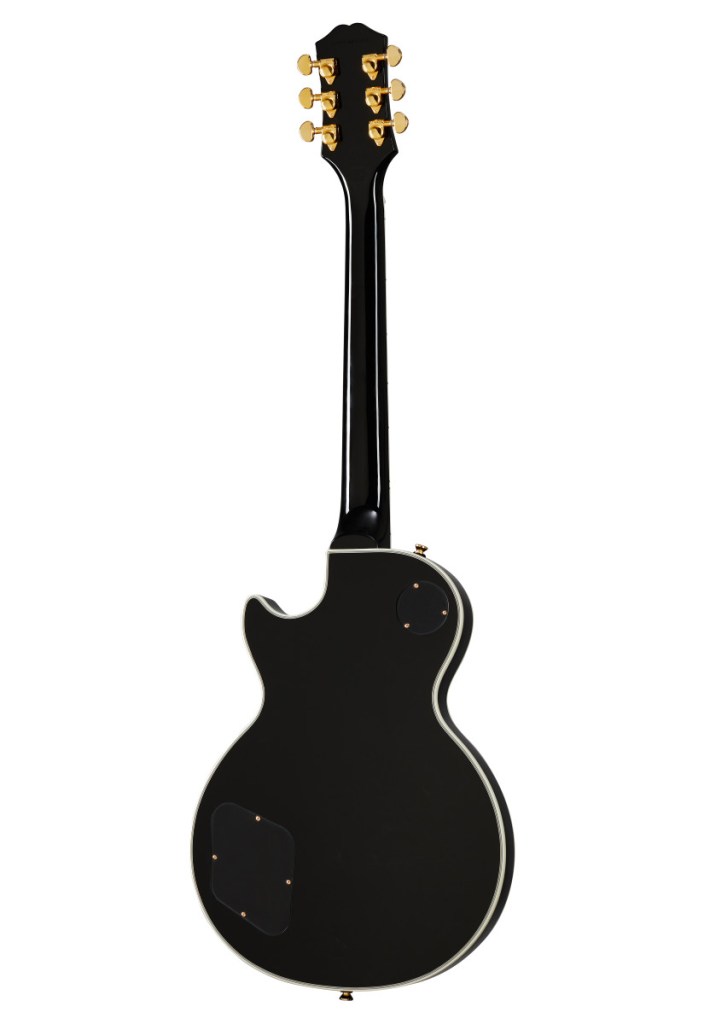
The Black Beauty: A True Beauty
Although beauty is in the eye of the beholder, there is little doubt among guitar enthusiasts that the Les Paul Custom Ebony is one of the most beautiful guitars in history, with its sleek, all-black finish, gold hardware, and intricate binding that give it a look of pure elegance. Its solid mahogany body exudes a timeless, classic aesthetic that speaks of luxury and craftsmanship. The contrast between the deep ebony color and the shimmering gold accents creates a striking visual balance, making it not only a guitar but a piece of art.

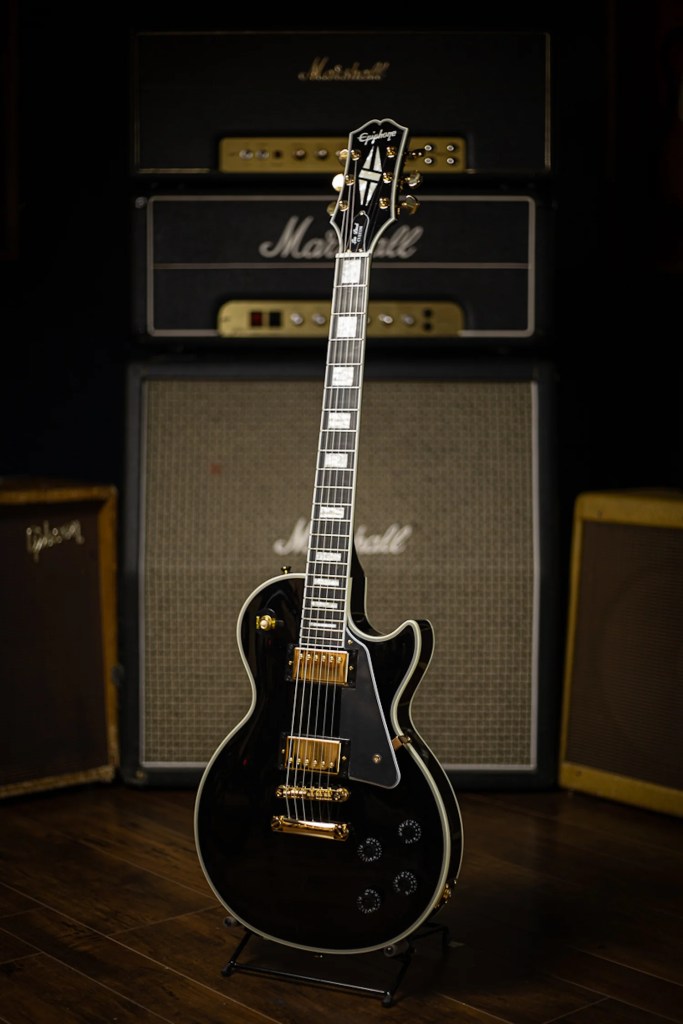
The Les Paul guitar shape itself is a major part of what makes it so classic, iconic, and coveted. Its single-cutaway design is perfectly proportioned, offering both comfort and boldness, while its curves and contours capture a blend of vintage charm and timeless appeal. This shape has become a symbol of rock ‘n’ roll history, seen in the hands of countless legends across genres. Its enduring design appeals not just for its beauty, but for how it feels in the player’s hands—solid, reliable, and ready to perform.
Playing Experience and Build Quality
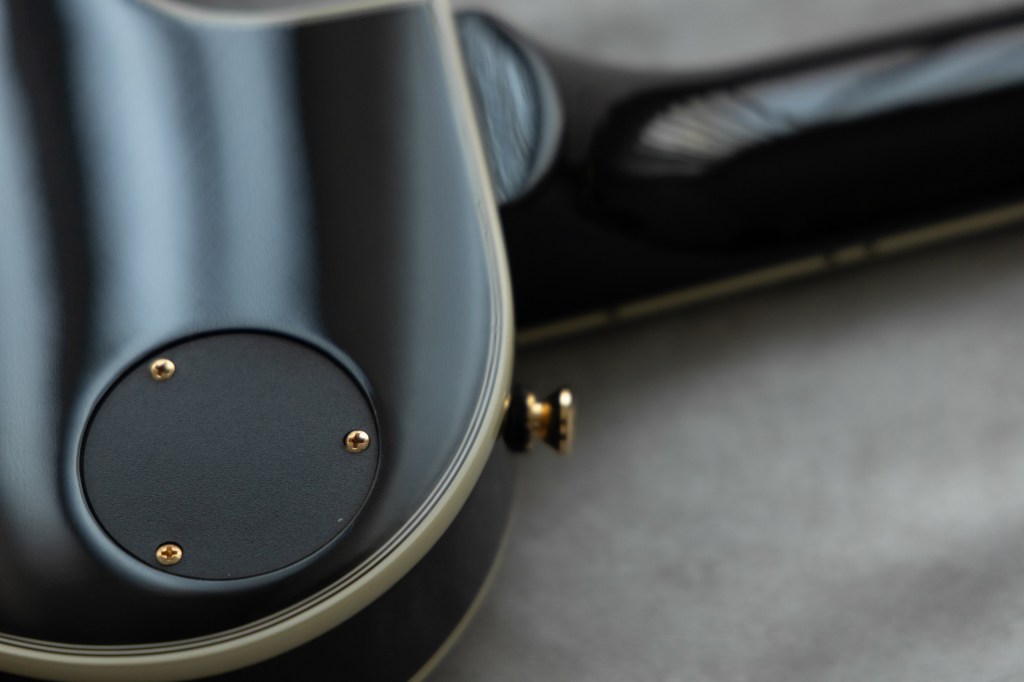
The body of this guitar is crafted from mahogany (2 piece body and 3 piece neck) and features a very nice multi-ply binding that encircles both the body and the headstock, while the neck is adorned with single-ply binding. Uniquely, this luxury Les Paul model also includes binding on the back of the body—an opulent touch that may go unnoticed by others but certainly adds to your personal enjoyment.
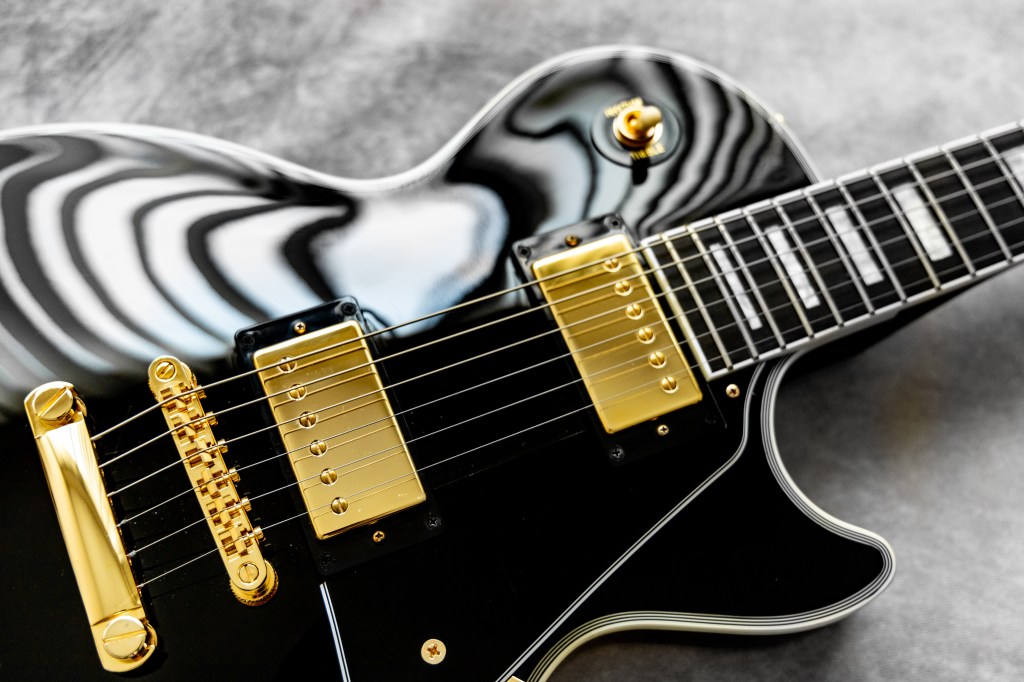
Unlike lower-tier models like the Les Paul Special and Junior, which have flat tops, this guitar boasts a classic arched-top, a hallmark of a superior Les Paul with a proper carved top. The fingerboard, which I typically find less appealing, is exceptional in this instance; it’s black, three-layered, and enhances the overall aesthetics, feel, and comfort of the instrument.
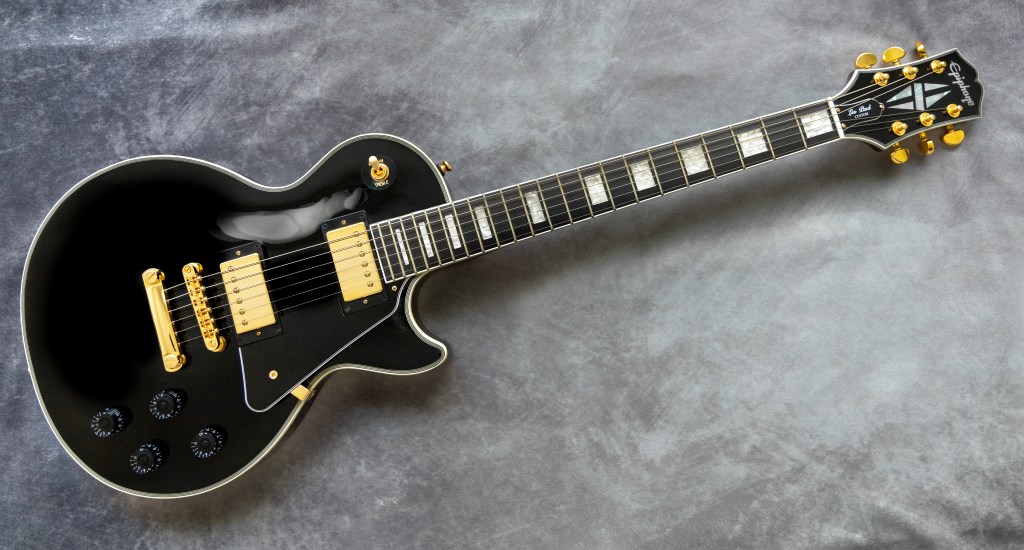
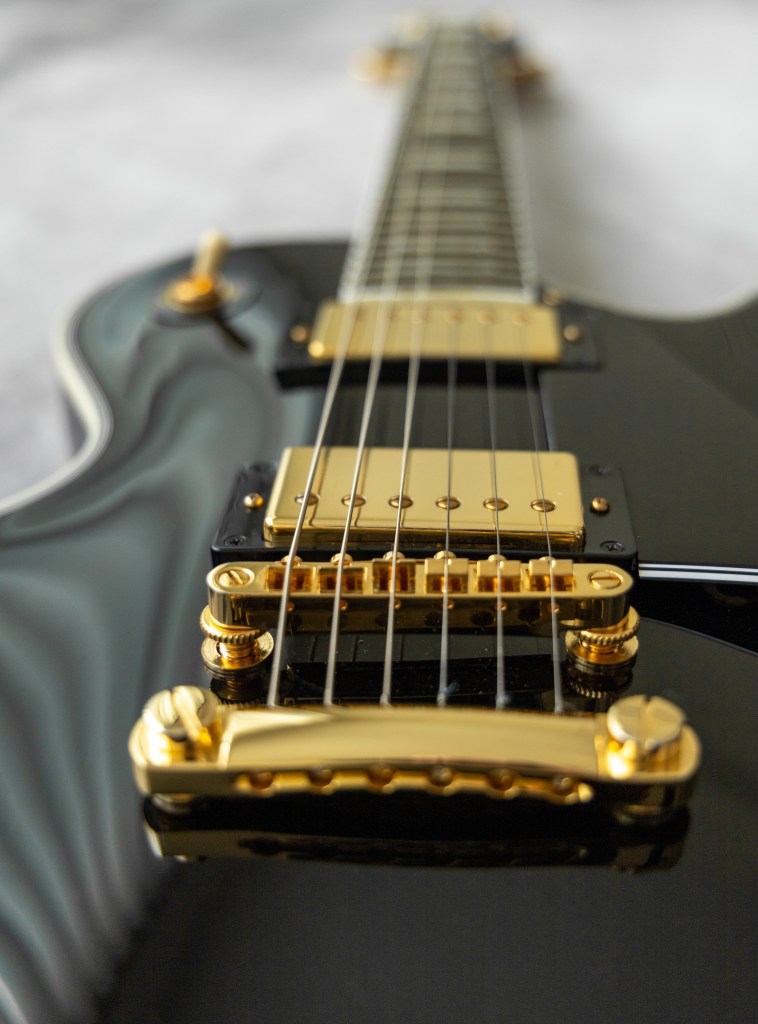
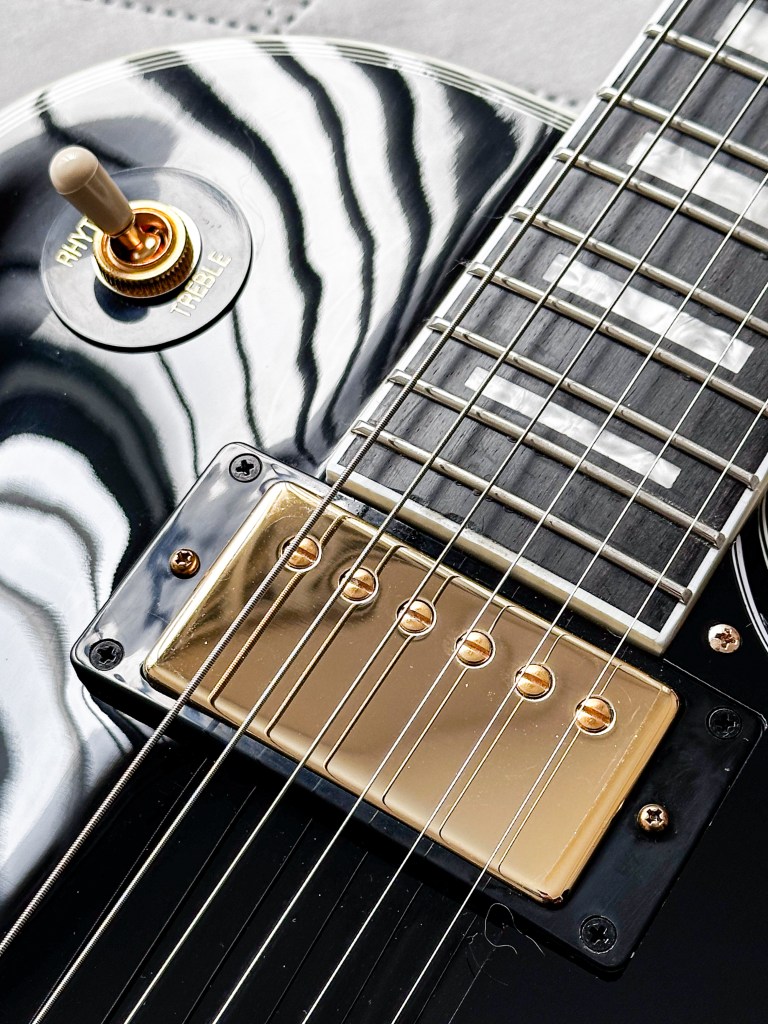
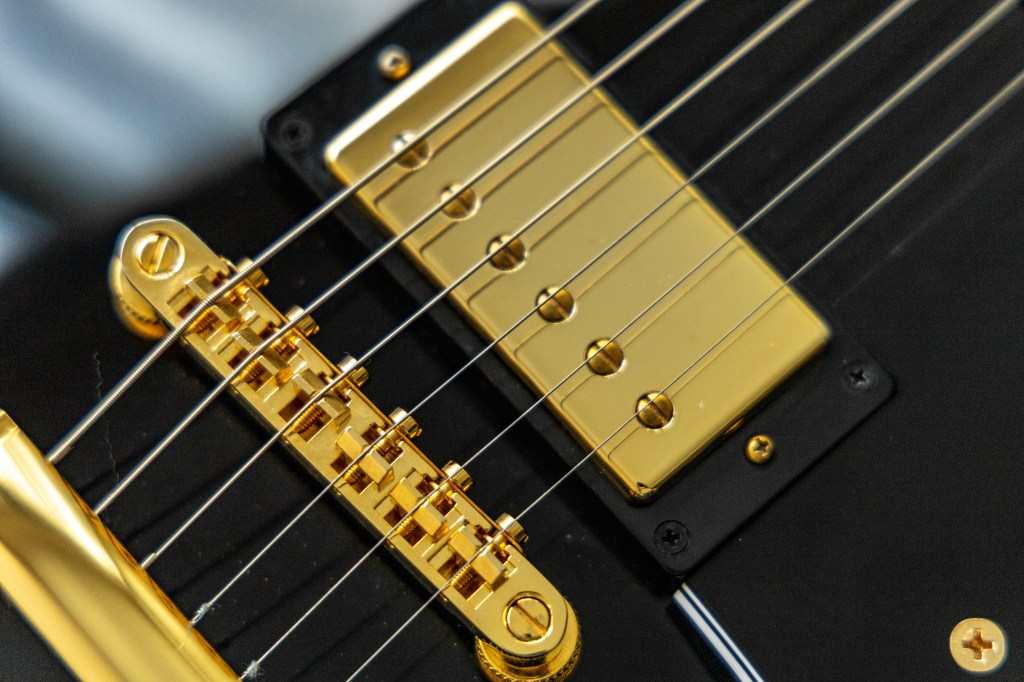
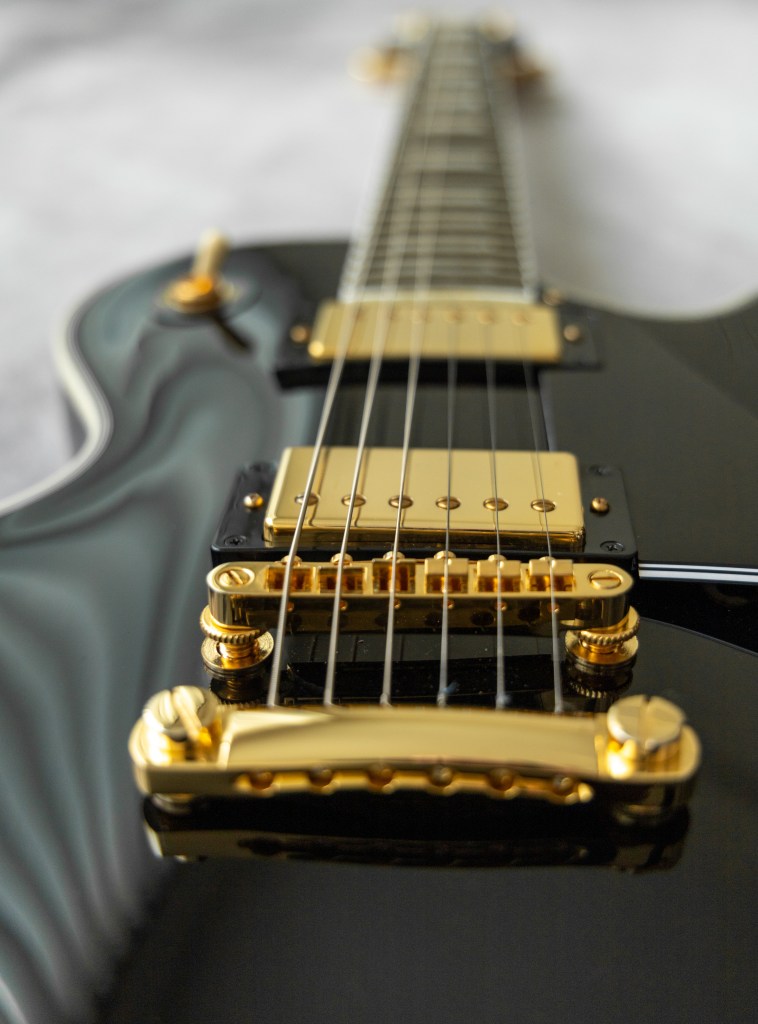
Right out of the box, the first thing that catches your eye is the guitar’s golden finished hardware, which is strikingly beautiful. It’s hard to think of another guitar that outshines this one with its gold-top hardware—perhaps only the Gretsch Falcon could rival its elegant appearance.
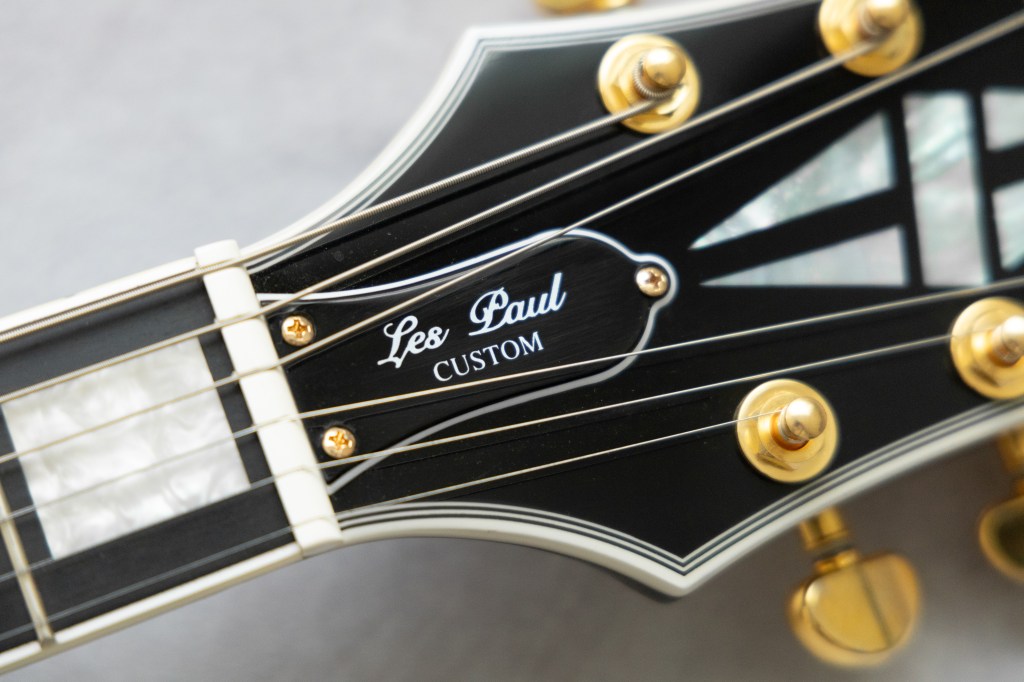
Headstock
There was a time when much debate surrounded Epiphone’s choice to use a different headstock shape instead of Gibson’s iconic ‘open book’ design. For the purists, the good news is that the classic ‘open book’ headstock has returned, and it’s featured here. This headstock adds a touch of sophistication, adorned with a genuine mother-of-pearl diamond inlay—an elegant detail also found on higher-end Epiphone models. The distinctive binding further enhances the guitar’s aesthetic, standing out as a unique feature. The bell-shaped truss rod cover, neatly inscribed with “Les Paul Custom,” perfectly completes the refined look.
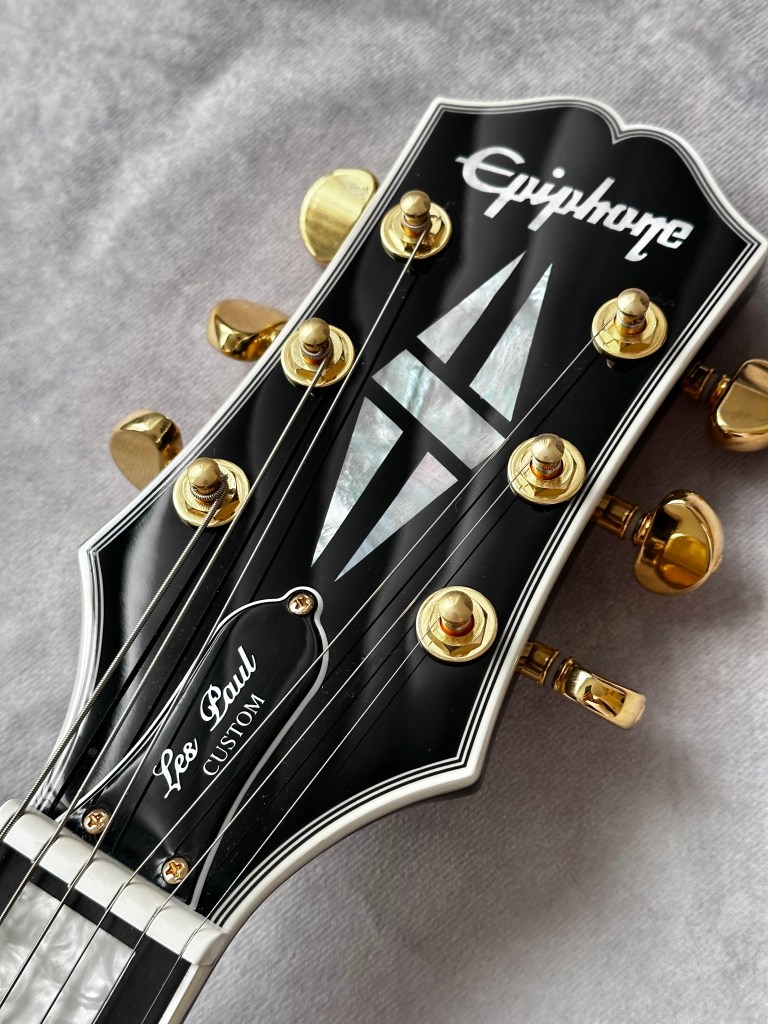
The tuning pegs are Grover Rotomatics sealed-in, lubricated gears, which not only look quite stylish but also excel in performance with their 18:1 tuning ratio, ensuring superb tuning stability. However, the bridge setup—comprising a Epiphone LockTone Tune-O-Matic bridge and an Epiphone LockTone Stop Bar—might not meet everyone’s standards. Players seeking higher quality might consider upgrading to superior options like the excellente, Schaller STM Bridge and Stop Tailpiece, renowned for their precision and durability.
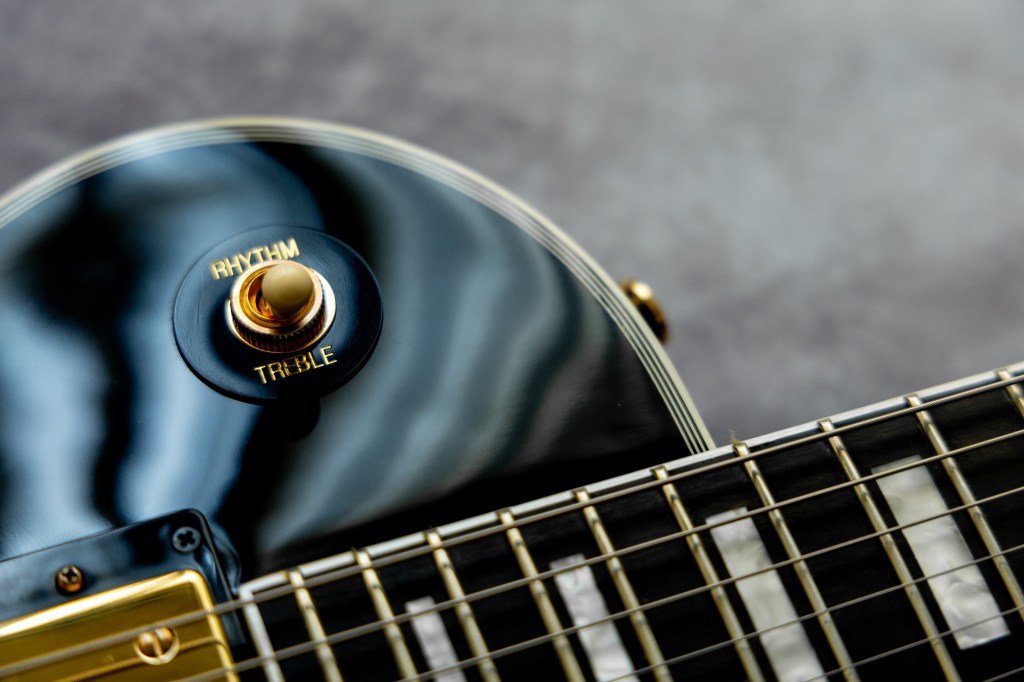
One aspect I’m not too fond of is the choice of speed knobs—they feel a bit too modern for my taste. While they look perfectly fine, they don’t quite complement the guitar’s vintage aesthetic. In my opinion, top hat knobs with insert points would better suit the classic vibe of the instrument.
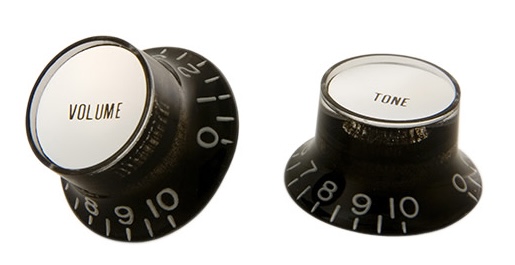
That being said, the speed knobs are very user-friendly and work seamlessly with the high-quality CTS® potentiometers, which are a big upgrade from the generic ones often found on cheaper guitars. It’s refreshing to see that this Les Paul Custom uses premium components in the right places, rather than cutting corners.
Neck & Fretboard
Neck
The Les Paul Custom boasts a 60s SlimTaper™ neck profile, celebrated for its sleek, fast feel. Introduced in the 1960s, this thinner, more refined neck contrasts with the chunkier profiles of earlier models, offering a comfortable and ergonomic design for smooth fretboard transitions. It’s ideal for players seeking precision, combining vintage flair with modern playability. Compared to the PRS SE DGT, the Epiphone offers an even more comfortable experience, thanks to its shorter scale length and slightly slimmer neck. And considering how comfortable the PRS SE DGT is, this Epiphone truly excels in ergonomics. Impressive!
This Epiphone comes equipped with a Graph Tech NuBone nut, which boosts tone, sustain, and tuning stability. Paired with Grover Rotomatics, it’s a killer combo! The NuBone’s synthetic material efficiently transmits string vibrations for improved resonance, while its low friction design enhances tuning, especially during bends and vibrato. Plus, its durability ensures long-lasting, reliable performance.

This Black Beauty comes with a 22 frets 24.75-inch scale length, which gives you softer string tension for easier bends and vibrato, and the closer fret spacing adds extra comfort—especially for players with smaller hands. The shorter scale also brings out a warmer, fuller tone with great sustain, perfect for rock, blues, and jazz. Paired with a 0.010-0.046 string gauge, the strings feel looser and more flexible, striking a great balance between effortless bends and enough tension to keep the tone clear and punchy. Plus, the reduced tension helps prevent finger fatigue, making it a smooth and enjoyable setup for more expressive playing.
Fretboard
When it comes to the fretboard, while many manufacturers have shifted to more affordable woods like laurel, jatoba, or pau ferro, this Les Paul Custom sets itself apart with a rich ebony fretboard accented by elegant pearloid block inlays. Ebony offers several key advantages over other woods. Its high density and durability make it long-lasting and resistant to wear, while its smooth, tight grain provides a fast, frictionless feel that players appreciate for precision and speed. Tonally, ebony delivers a bright, clear sound with excellent sustain, enhancing articulation and resonance. Additionally, its resistance to moisture and environmental changes means it requires less maintenance and is less prone to warping or shrinking.
Fretwork
About the frets, I have some bad news: this is, without a doubt, the biggest downside of this guitar. The original Les Paul Custom earned the nickname “fretless wonder” because of its low, flat fretwire, which set it apart from other Les Paul models and provided an exceptional, unique feel.
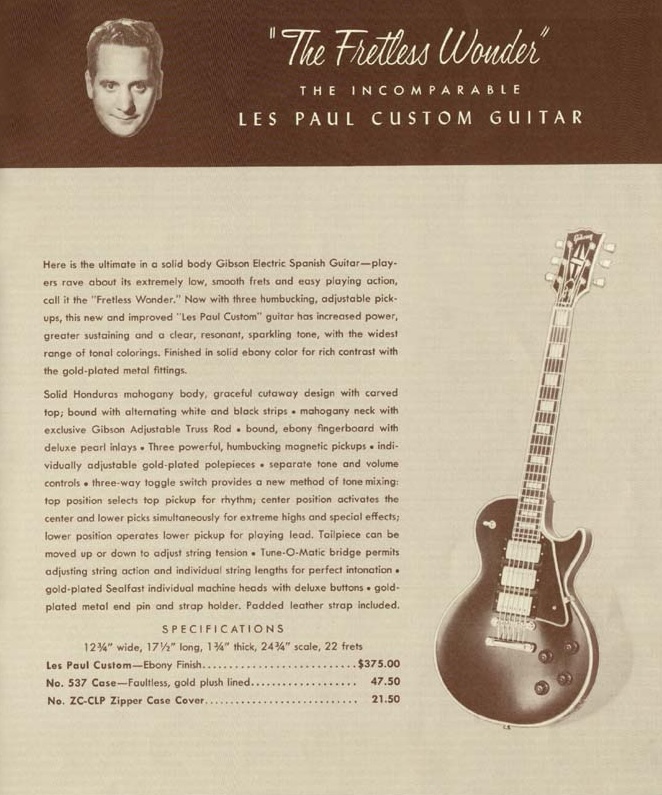
The Epiphone version features standard rounded medium jumbo frets, so don’t count on that legendary comfort. However, the real letdown is the subpar fretwork quality. On my model, the frets are surprisingly rough. While the edges are polished well enough, the fret surfaces themselves are poorly finished, resulting in a scratchy sound that’s both unpleasant and unexpected. Even much cheaper guitars, like my $400 Cort CR250, have much better-polished frets, as do all Cort-Tek Indonesian-made PRS SE guitars. It’s disappointing to see such poor fretwork from an otherwise reputable brand on a guitar that’s solid in many other aspects. The good news? It’s fixable. You can either wear down the frets through playing or take it to a technician for a proper fret polish. While not a difficult fix, it’s frustrating that this flaw wasn’t addressed at the factory. It seems Epiphone cut corners here to hit the $850 price point—not a dealbreaker, but definitely an annoyance.
Glossy Finish
The polyurethane gloss finish on this guitar, though not the best choice for rapid shredding, provides excellent control and comfort—perfect for genres like blues, hard rock, or jazz, where precision and feel matter more than speed. This finish makes the neck versatile, lending itself well to expressive, deliberate playing styles. While some argue that a nitrocellulose finish improves tone and ages more gracefully, others appreciate polyurethane for maintaining its polished appearance longer, striking a balance between aesthetic durability and tonal evolution. The polyurethane finish gives the guitar a strikingly beautiful shine, enhancing its deep black aesthetic. In contrast, original Gibson models with nitrocellulose finish tend to be less glossy, and on relic versions, the finish can appear more muted. Some argue that a thinner finish allows the wood to ‘breathe,’ potentially improving the sound. Whether this makes a noticeable difference is up for debate—my guess is that it’s more on the subjective opinionated side than a fact backed by solid science.
Wonderful Look, Average Playing Experience
The Epiphone Les Paul Custom offers a solid playing experience, but it lacks the standout qualities of its Gibson counterpart. While the build quality is decent, there’s a stark difference between its luxurious appearance and its average performance. It looks high-end but plays more like a mid-tier guitar.
I can speak from experience: 20 years ago, I bought a 1974 Gibson Les Paul Custom, and the playing experience was unbelievable. The nickname “Fretless Wonder” is a testament to its truly remarkable feel.
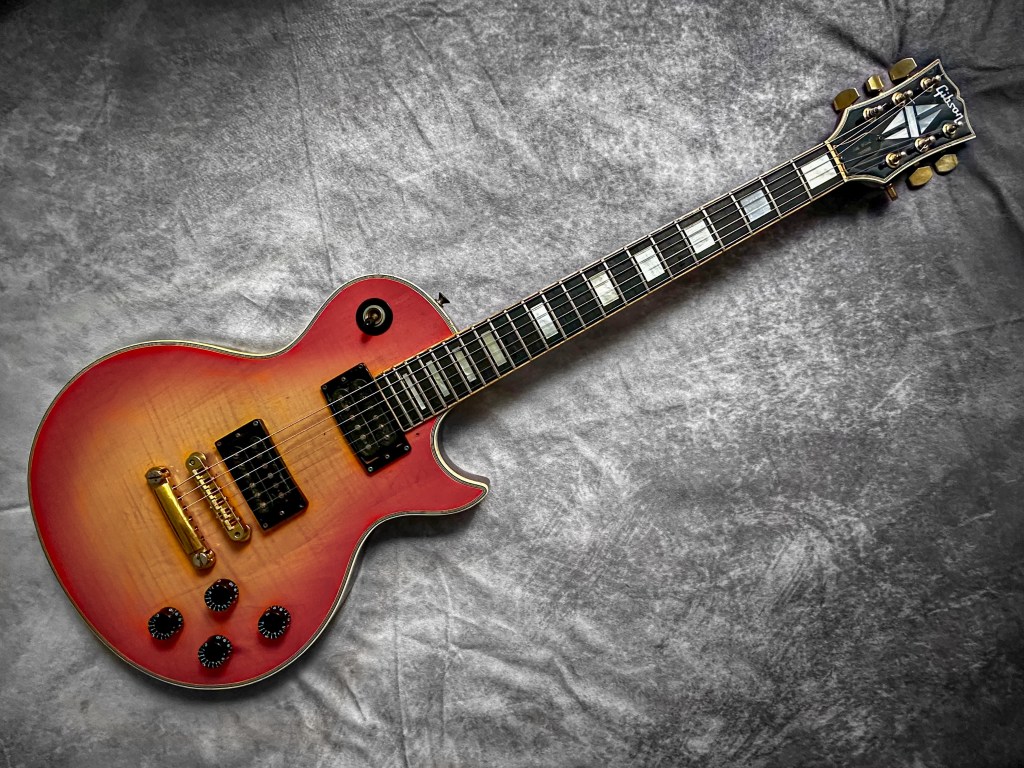
On the plus side, the ebony fretboard on the Epiphone Les Paul Custom feels smoother than most alternatives, adding some ease to playability. However, the frets themselves feel rough, which detracts from that advantage. If you’ve ever played a vintage Gibson “fretless wonder” Les Paul Custom, don’t expect the same silky, effortless feel here. That said, when compared to other Epiphones, its playability holds up very well. Ultimately, this is a case where the guitar’s beauty outshines its actual performance—the risk is that you might find yourself admiring its stunning design more than actually playing it.
Sound
The Epiphone ProBucker Pickups: A Vintage-Inspired Upgrade with Modern Appeal
In terms of sound, there are no surprises: it delivers the unmistakable Les Paul tone that is ultimately what matters most, characterized by good sustain and a punchy yet controlled signal.
This guitar perfectly captures the soulful essence of B.B. King licks and truly shines in both jazz and, unsurprisingly, blues. It’s also robust enough for hard rock and metal rhythms.
At the core of this Les Paul Custom’s sound are the Epiphone ProBucker pickups, crafted as a tribute to the Gibson PAF (Patent Applied For) pickups, closely emulating the tone and characteristics of Gibson’s BurstBucker series. These pickups feature Alnico II magnets and unevenly wound coils, designed to capture the airy, vintage sound that made early Gibson pickups so iconic. This setup delivers a slightly “open” tone with rich midrange emphasis, making them a perfect fit for genres like classic rock, blues, and jazz.
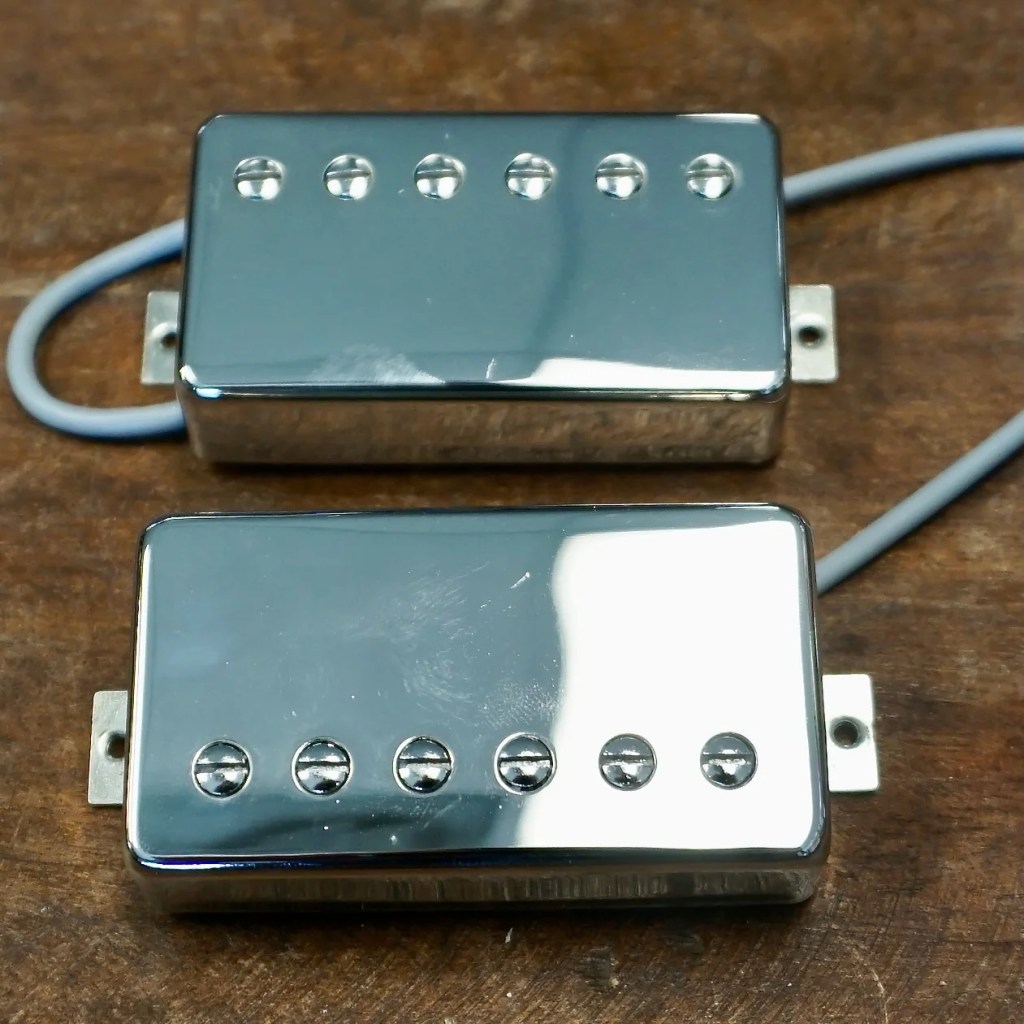
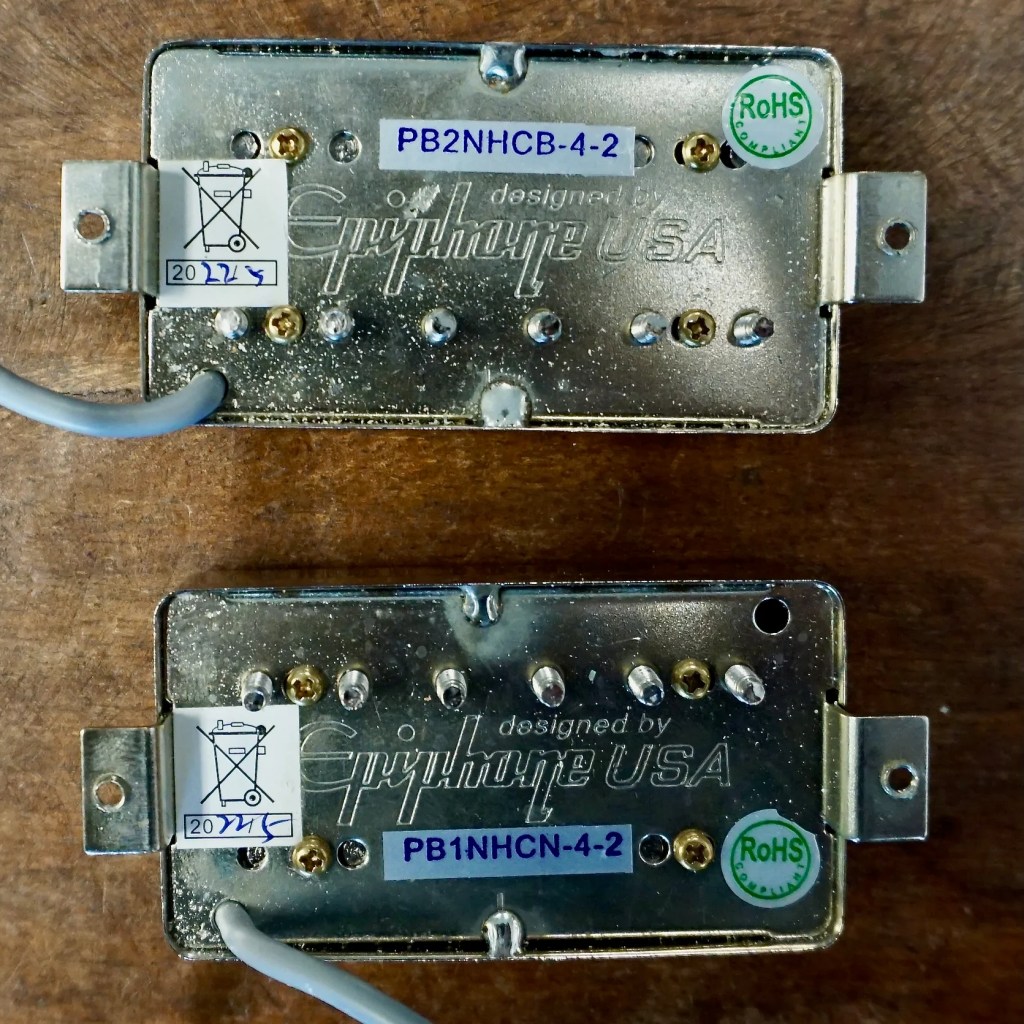
The ProBuckers are known for their ability to capture that vintage “PAF” tone at a much more affordable price than their Gibson counterparts, like the BurstBuckers and 57 Classics. Their build quality, using 18% nickel silver for the base and covers, reduces unwanted electrical interference, providing clearer, crisper tones. These pickups are wax-potted to minimize microphonic feedback, a feature important for high-gain settings.
While primarily featured in Epiphone guitars, ProBuckers are also sold separately as aftermarket upgrades due to their exceptional ability to deliver high-quality, vintage-inspired sound. Their widespread popularity and performance make it no surprise that the Epiphone Les Paul Custom is equipped with these highly regarded pickups, ensuring it delivers a rich, warm tone reminiscent of the iconic Les Paul sound.
The pickups produce a bassy sound yet maintain clarity and balance—no muddiness in sight! I really appreciate how I can switch between the neck, bridge, and middle positions with the 3-way toggle, each with dedicated volume and tone controls, adding loads of versatility. The neck pickup isn’t overly sharp, which is perfect for getting into Santana grooves—no surprise there, given Santana’s history with Gibson SG and Yamaha SG2000 guitars. The sustain is robust, while the overall sound is deep, resonant, and powerful, yet not overwhelming.
The Good, the Bad, and the Ugly
The Bad: Country of Manufacture
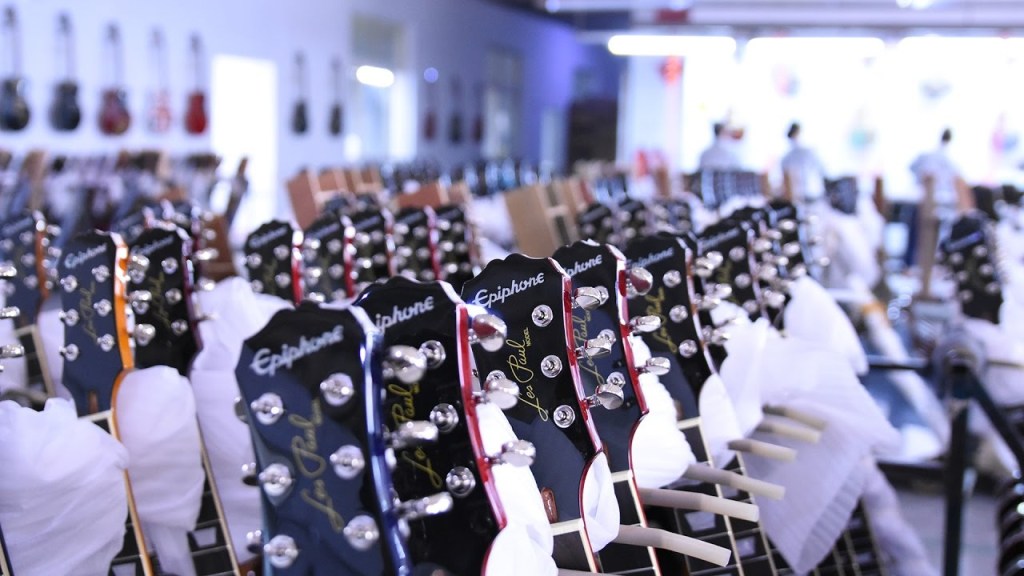
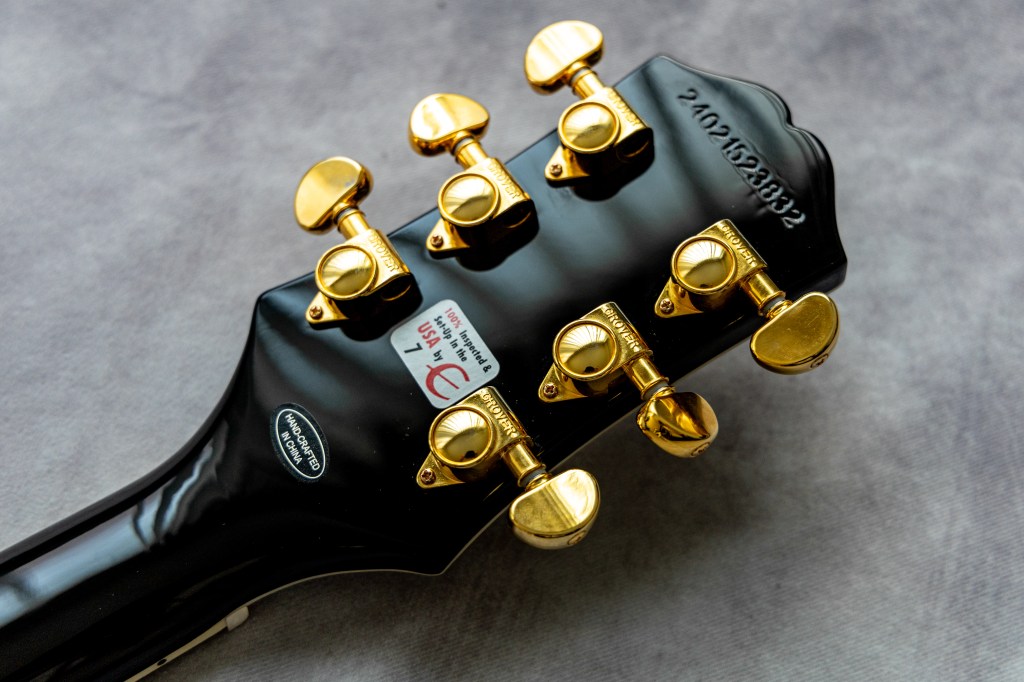
The Epiphone Les Paul Custom is produced at Gibson’s Qingdao factory in China, which has been dedicated to Epiphone models since 2002. While the quality control at this facility is solid, though not quite top-tier, this Les Paul Custom still stands out as one of the best Epiphones I’ve played. Adding to its appeal is the fact that it’s hand-crafted—a rare and appreciated detail in today’s mass-produced world.


The Good: Price Tag
The Epiphone Les Paul Custom is priced at a wallet-friendly $850, while its Gibson counterpart demands a hefty $5,500. Is the Gibson truly worth almost ten times as much? That decision boils down to your personal taste, priorities, and budget. For some players, the prestige, craftsmanship, and exclusivity of a Gibson may justify the steep price—similar to choosing a Rolls Royce over a Genesis. Ultimately, it’s not just about functionality; it’s about what resonates with you as a player and how much you’re willing to invest in that iconic experience. Collectors such as Jim Irsay, the owner, chairman, and CEO of the NFL’s Indianapolis Colts, are known to spend hundreds of thousands of dollars on their collections.
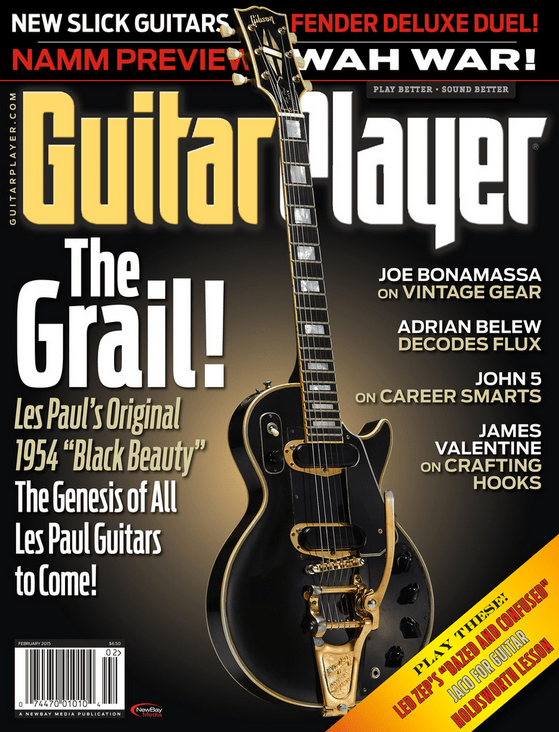

The Ugly: Fretwork
As I mentioned earlier, the fretwork on this Epiphone leaves something to be desired. I won’t go over all the details again, but it’s important to keep this in mind as a noticeable drawback—though not necessarily a dealbreaker.
Epiphone Les Paul Custom Pros & Cons
Pros:
- Exceptional Value: The Epiphone Les Paul Custom Ebony offers a luxurious look at a fraction of the cost of a Gibson, making it accessible to a wider range of musicians.
- Classic Design: It features the timeless Les Paul aesthetics, including a sleek ebony finish and gold-plated hardware, making it visually stunning.
- Quality Sound: Equipped with ProBucker pickups, it delivers a rich, resonant tone reminiscent of classic Gibson guitars, suitable for various musical styles from jazz to hard rock.
- A True Les Paul: This is no mere imitation but the authentic article from a respected brand that is an integral part of the Gibson family.
- Solid Build: The construction is robust, featuring a mahogany body and ebony fretboard, ensuring durability and a quality playing experience.
Cons:
- Fretwork Quality: The fretwork on some units is rough and inconsistent, requiring additional setup or polishing to reach a satisfactory level of playability.
- Playability vs. Appearance: Despite its luxurious looks, the playing experience doesn’t quite match the high-end aesthetics, feeling more in line with a mid-tier guitar.
- Country of Manufacture: Though the guitar is hand-crafted, some players may take issue with it being produced in China, as quality control can be less consistent compared to other regions.
Conclusion: A Guitar with Style and Substance
The Epiphone Les Paul Custom Ebony dazzles visually. Sonically is a solid guitar for jazz, blues and hard rock. It may not be the best fit for funk or fast shredding, but it performs really well across a wide range of other genres. The hardware, particularly the tuners, is robust, and the pickups produce an authentic Les Paul sound with a modern twist. Its captivating aesthetics draw attention to every detail. While playability is standard and the fretwork might need some refining, these are minor concerns given its compelling price point.
The Epiphone Les Paul Custom may fall short when compared to its Gibson counterpart, but within Epiphone’s lineup, it stands out as a true gem, offering an upscale experience that’s hard to beat.
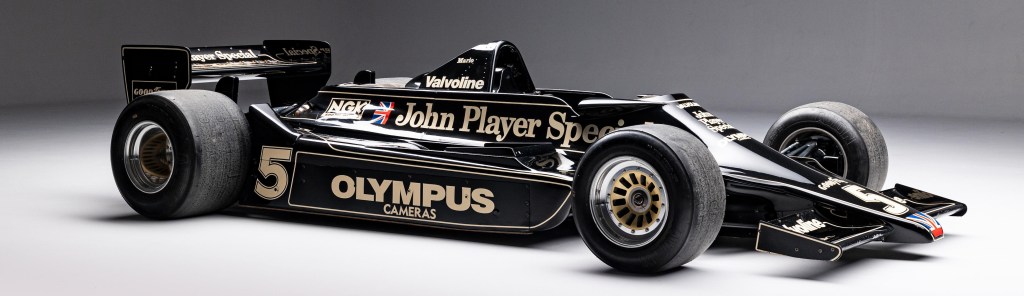
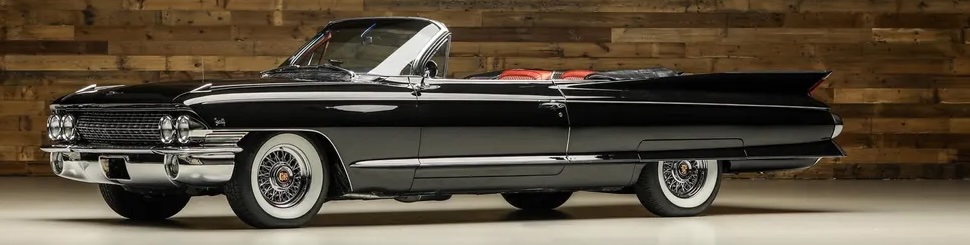
If I had to liken this guitar to a car, it would be the Cadillac Eldorado Biarritz—an absolute symbol of American vintage beauty, class, and luxury. Much like the Eldorado, this Epi offers an experience that’s all about indulgence and style, where performance meets elegance in a way that’s unforgettable. It’s a statement piece.

In the end, the Epiphone Les Paul Custom offers a glimpse of premium look without the steep price, making it a fantastic option for players looking for a stylish, high-quality instrument at a more affordable cost. While it doesn’t quite match the comfort, quality or playability of its original vintage Gibson counterpart, it remains a standout choice for those willing to trade a bit of playability for its undeniably luxurious appearance and the timeless Les Paul tone—all without breaking the bank.
Specs
- General
- Number of Strings: 6
- Left-/Right-handed: Right-handed
- Body
- Body Type: Solidbody
- Body Shape: Les Paul Custom
- Body Material: Mahogany
- Body Finish: Gloss
- Color: Ebony
- Neck
- Neck Material: Mahogany
- Neck Shape: Slim Taper
- Neck Joint: Set Neck
- Radius: 12″
- Fingerboard Material: Ebony
- Fingerboard Inlay: Pearloid Blocks
- Number of Frets: 22, Medium Jumbo
- Scale Length: 24.75″
- Nut Width: 1.693″
- Nut Material: GraphTech
- Hardware
- Bridge/Tailpiece: LockTone ABR Bridge with Stopbar Tailpiece
- Tuners: Kidney-style Tuners
- Electronics
- Neck Pickup: ProBucker-2 Humbucker
- Bridge Pickup: ProBucker-3 Humbucker
- Controls: 2 x volume, 2 x tone
- Switching: 3-way toggle pickup switch
- Miscellaneous
- Strings: Gibson, .010-.046
- Case/Gig Bag: Sold Separately
- Manufacturer Part Number: EILCEBGH1

 oscaronguitars.com
Leave a comment