
Note: This is an In-depth review. For my concise review follow this link.
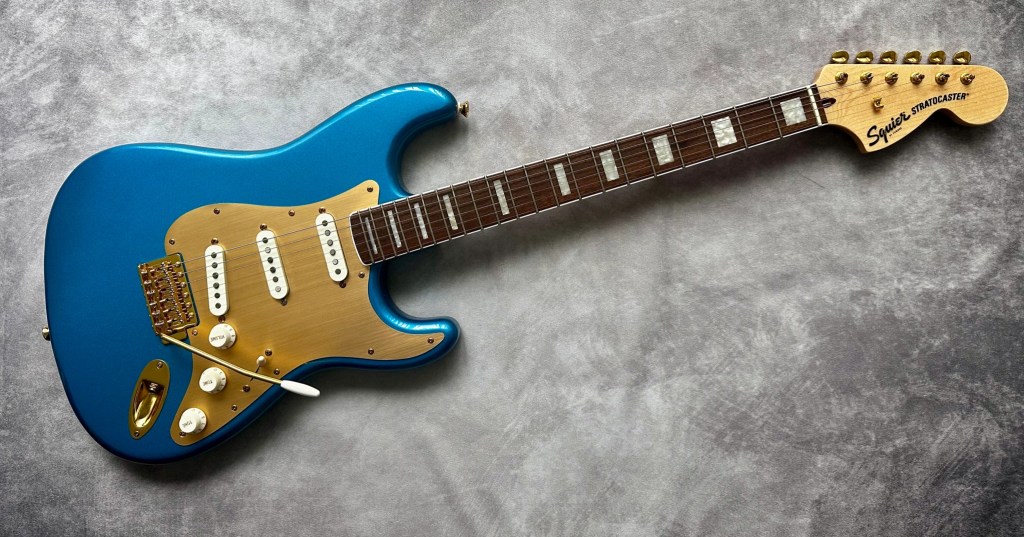
In 2022, Squier rolled out a limited-edition line to mark their 40th anniversary, and I couldn’t resist eyeing a Stratocaster from this collection. Now, after spending some quality time with it, I’m excited to share my thoughts on Squier’s 40th Anniversary Stratocaster—its highs, lows, and everything in between.
The 40th Anniversary Hook: Limited Edition Appeal
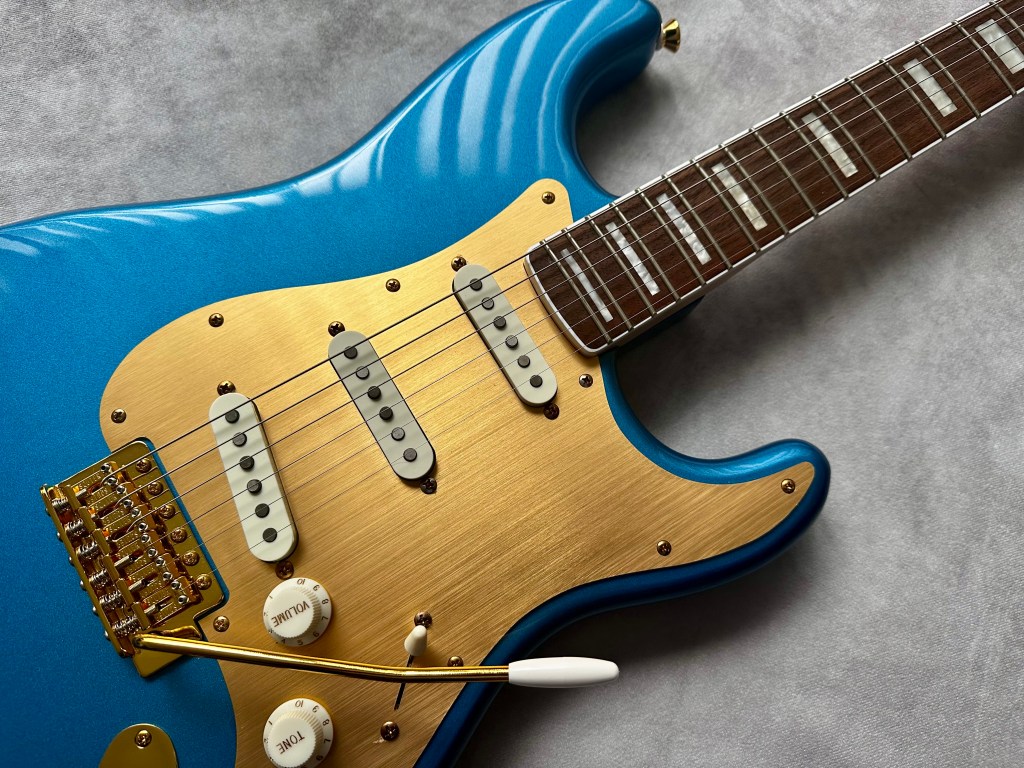
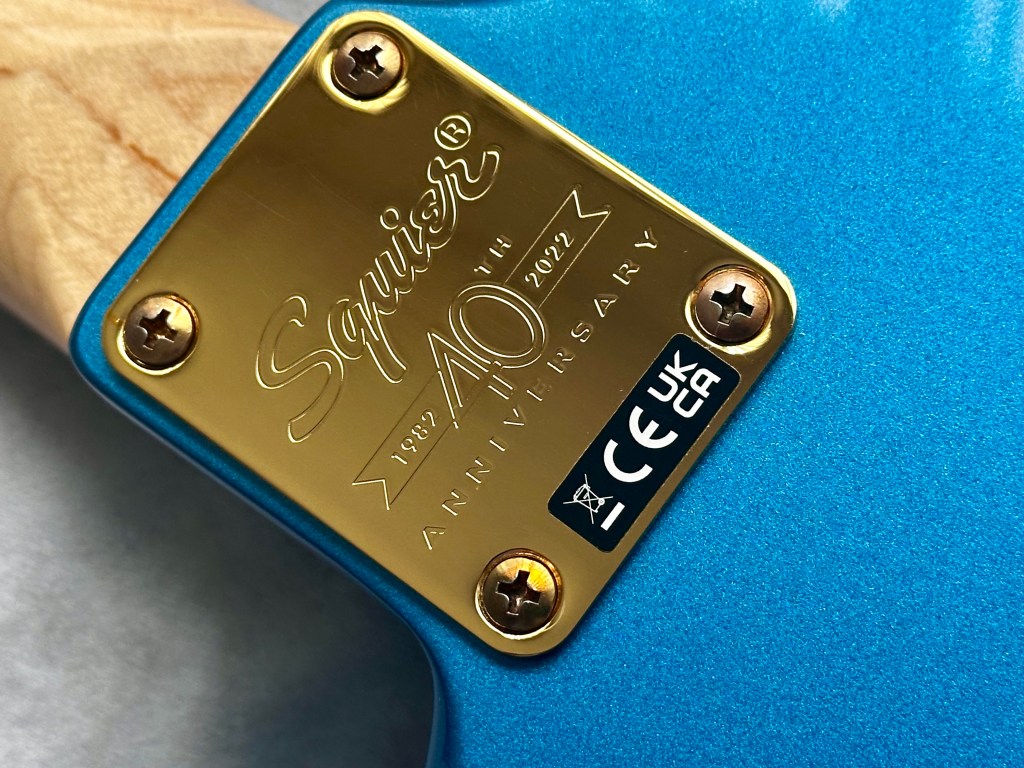
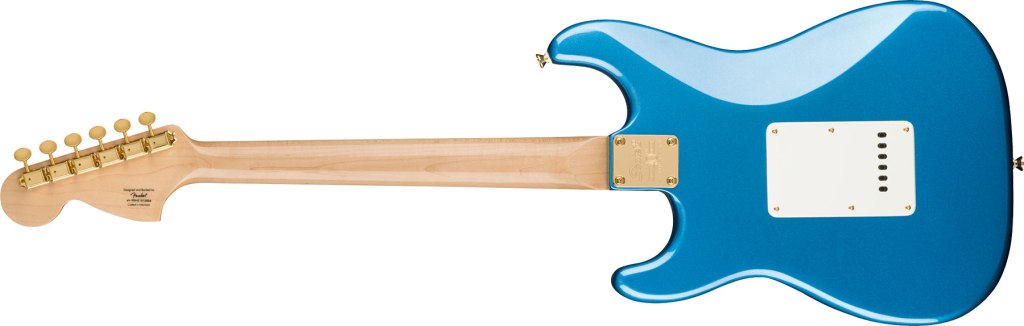
This limited-run guitar was produced exclusively during 2022 to commemorate four decades of Squier. While I bought mine in October 2024, it’s becoming increasingly difficult to find them. The limited-edition appeal of this model is a big part of its charm. The back of the guitar features a special plaque highlighting its collectible status, a nice touch that adds to the overall appeal
Vintage Vibes in a Modern Guitar
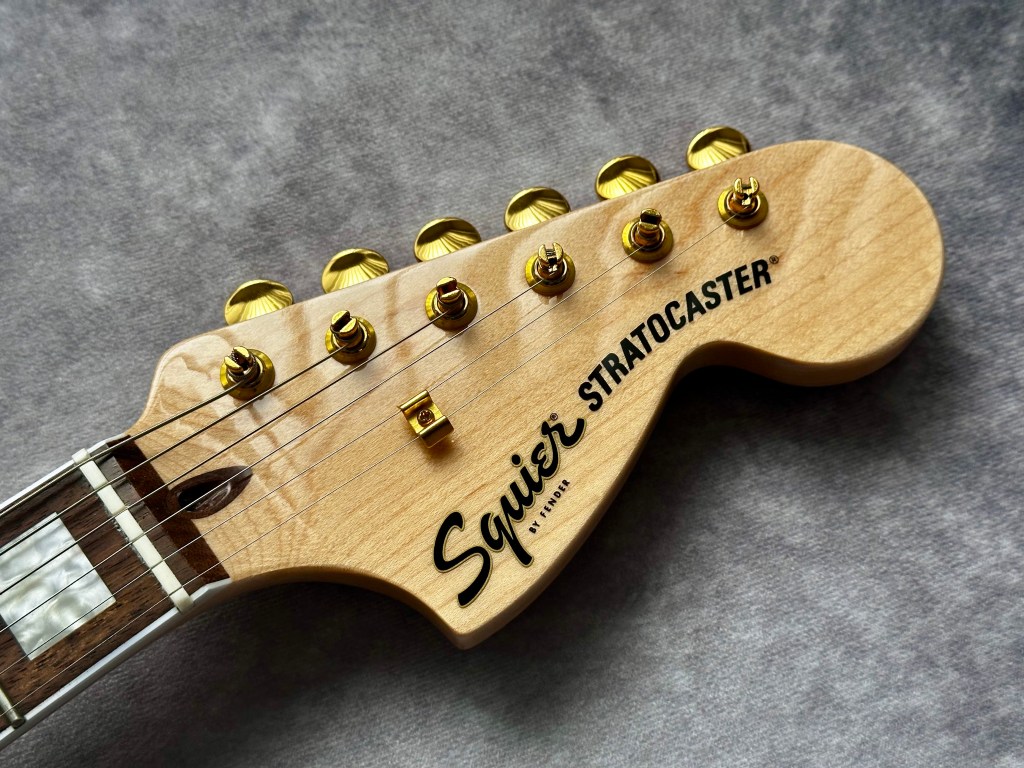
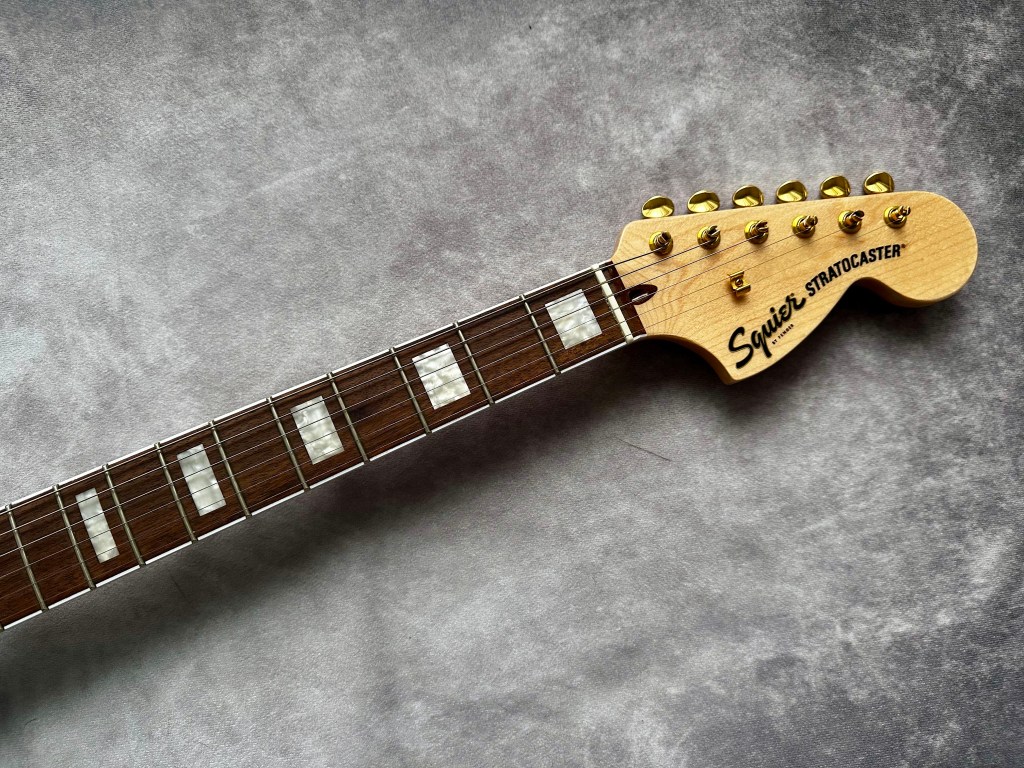
Though part of the “vintage” series, the Squier Stratocaster 40th Anniversary doesn’t attempt to look like a relic guitar. Instead, it features subtle vintage elements, like its 70s-style headstock and vintage-style tuners. The guitar has a shiny finish with just the right hint of vintage flair. I particularly like the headstock, which stands out with its bold 70s design and the golden hardware throughout the guitar. It’s a nice, elegant touch that sets it apart from your standard Stratocaster.
The Neck: Style and Comfort, With Some Trade-offs
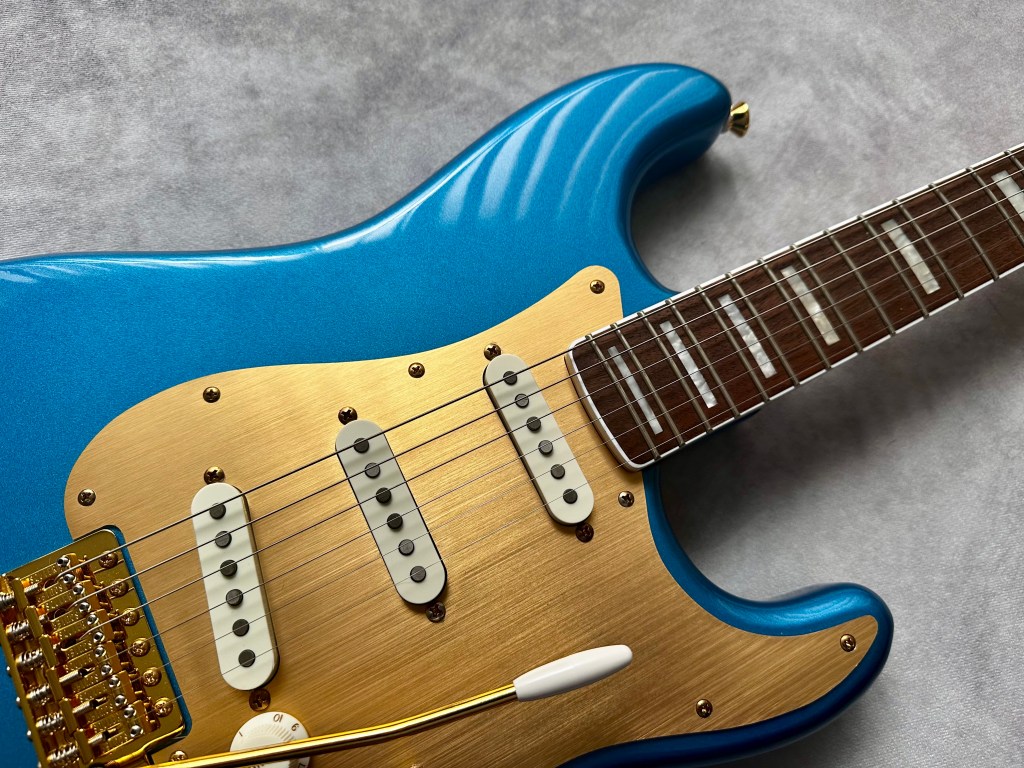
The neck of this guitar is striking right from the start. Its 70s-style headstock, paired with block inlays reminiscent of the Les Paul Custom, creates a unique visual appeal. Crafted from Maple, the neck enhances the guitar’s brighter tones, while the fretboard is made from Indian Laurel—a cost-effective alternative to Rosewood. Although I’m not entirely fond of its lighter hue, it’s not a significant drawback. A bit of lemon oil can deepen the wood’s color and provide essential nourishment.
The vintage tuners on this guitar are disappointing to say the least—stiff and clunky; they create a frustrating combination, especially when paired with the resistance of the tremolo. The guitar has significant tuning stability issues; even a slight tremolo use can throw it out of tune, and frequent retuning is a must even without event touching the tremolo. Squier clearly took shortcuts with the tuning hardware on this model, indicating an immediate need for an upgrade. Without addressing this weak point, playing the guitar can quickly become a frustrating and annoying experience.
The C-shaped neck has a comfortable, if slightly chunky vintage feel, with a glossy polyurethane finish that adds a pleasing vintage touch. However, this slick finish can impede rapid playing, which may be a drawback for shredders. With just 21 frets, some players might also feel restricted. The fretwork could use improvement as well—the edges are a bit rough, and the frets could benefit from more polishing. Here, the difference between budget guitars and premium American models is clear; higher-end models often have hand-finished frets, which greatly improve both playability and comfort.
Overall, the guitar feels like it needs to be broken in—nothing is silky smooth, and every aspect requires a bit of extra effort. Even with lighter 9-42 gauge strings, it plays harder than other guitars with shorter scales and heavier 10-46 strings.
The Body: Classic Stratocaster Comfort
The body of this guitar is everything you’d expect from a Stratocaster—comfortable, ergonomic, and lightweight. Made from Nyatoh, a tropical hardwood, the body delivers a warm, balanced tone with excellent resonance. At around 7.7 pounds (3.5 kg), the guitar feels substantial without being heavy.
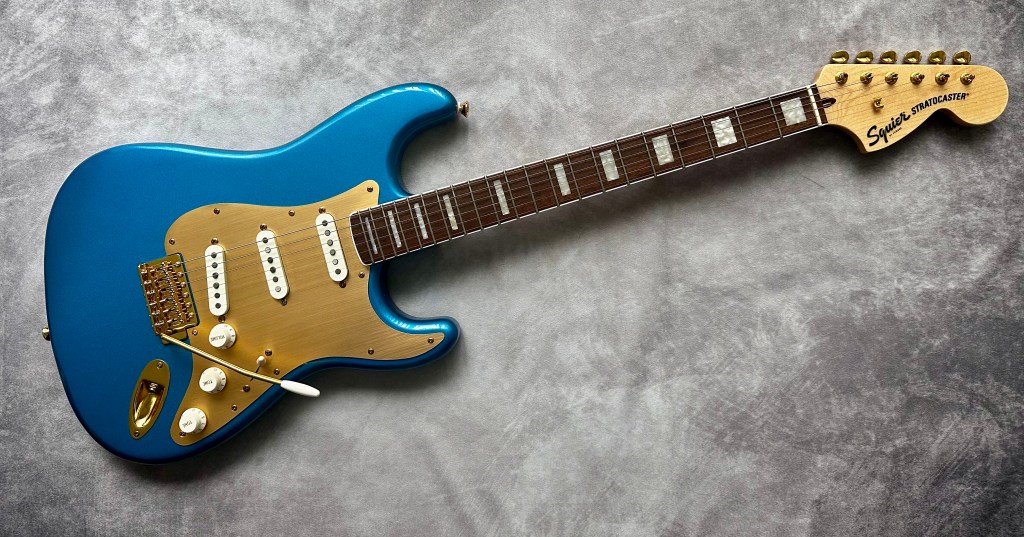
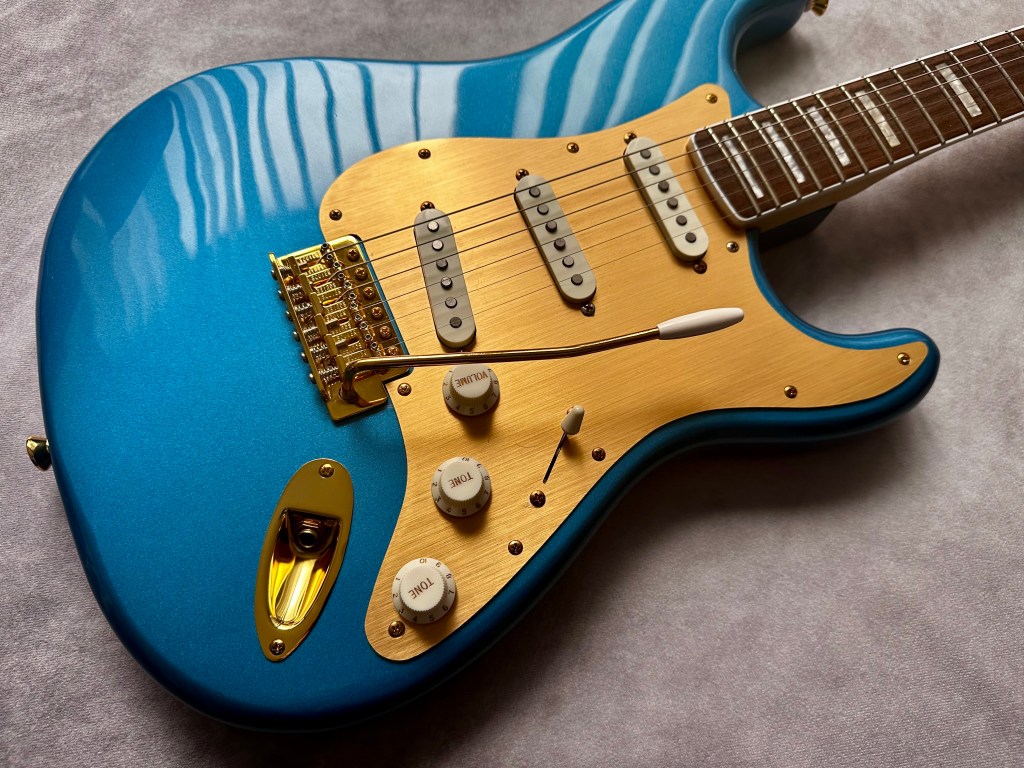
What immediately grabbed my attention was the flawless metallic paint job. Every curve and contour is impeccably done, showcasing Squier’s impressive attention to detail in this department. The Lake Placid Blue finish, combined with the gold hardware, gives the guitar a perfect blend of vintage charm and class. The anodized aluminum pickguard adds a luxurious touch, though it does feel a bit cold to the touch.
Tremolo Bridge: Unbearable Stiffness to Overcome
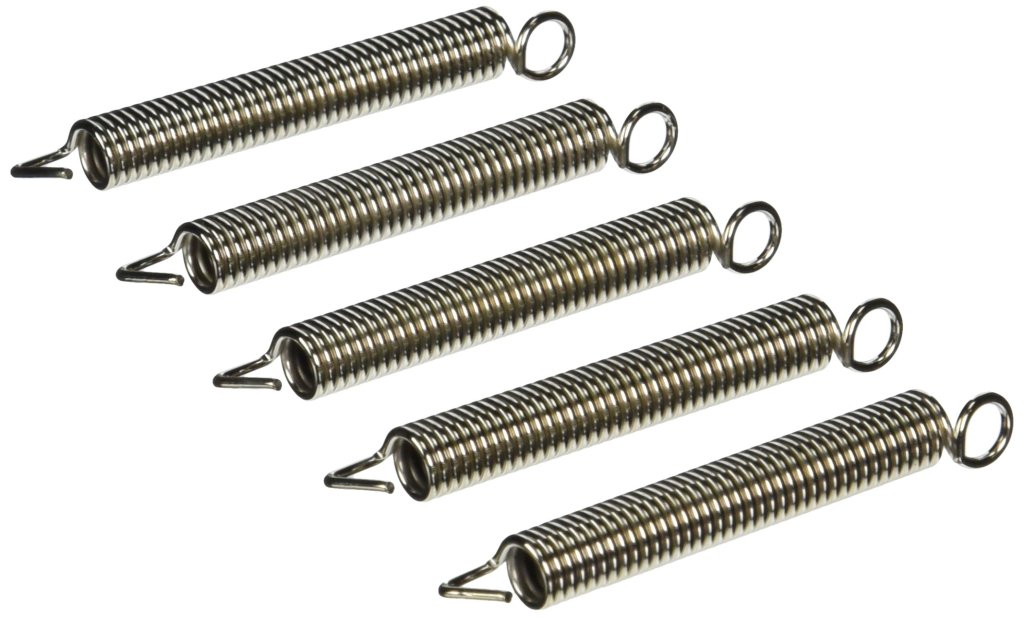
The bridge on this guitar is frankly very poor and the whammy bar’s stiffness was a major issue. Right out of the box, it required an excessive amount of force to use, which was an unpleasant surprise. It’s clear that the guitar needs a lot of playtime to fully loosen up. Another option would be replacing the tension springs, adding a bit more to your upgrade budget. If you rarely use the tremolo, it won’t be a problem. But if you rely on it often, you’ll definitely need to address the stiffness.
Pickups and Electronics: Bright and Versatile
The pickups on this guitar are a pleasant surprise. With Alnico V magnets instead of cheaper ceramics, they deliver a bright, vintage tone unsurprisingly reminiscent of 70s Stratocasters. The 5-way selector gives you a great variety of tones, from the nasal neck pickup to the punchy bridge. I particularly loved positions 2, 3, and 4 for those chunky funk rhythms. While the tone can be a bit too bright for my liking, it’s easily tamed with the tone controls. Overall, the pickups are solid, and I don’t feel the need to upgrade them anytime soon.
That said, the pickups are on the lower-output side and won’t push your amp into overdrive by themselves. If you’re after a dirtier sound, an overdrive or distortion pedal is a good idea. I’m not entirely convinced that changing the pickups is urgent—it really depends on what you’re aiming for tonally and volume. What I can confidently say is that this guitar nails that classic, nasal Fender sound with ease.
A Promising Foundation
This guitar’s versatility is one of its greatest strengths. It handles funky rhythms, jazzy chords, and even bluesy Stevie Ray Vaughan tones with ease. While it might not be the best for hard rock or metal, players like Adrian Smith and Yngwie Malmsteen have proven that a Stratocaster can deliver heavy tones with the right setup.
At $450 USD, this guitar offers a promising foundation for future upgrades. Out of the box, its 40th anniversary appeal is undeniably beautiful, but it also reveals several areas needing improvement. Issues such as imprecise tuners, unpolished fretwork, a stiff tremolo, and persistent tuning problems can detract from the playing experience. The pickups, while decent, deliver a low output that might necessitate an upgrade depending on your style and sonic preferences.
If you’re considering upgrading the hardware and pickups, prepare to spend an additional $600, potentially pushing the total close to $1,000. It’s essential to weigh whether these upgrades genuinely add enough value to justify the investment. Given this guitar’s status as a special anniversary model, I’m inclined to enhance it with better hardware, though I’m still on the fence about changing the pickups. This guitar boasts a unique, attractive design and carries historical significance as a limited-edition piece. However, straight out of the box, the overall experience feels a bit rough around the edges.
In fact, nearly every component aside from the body and neck could benefit from significant upgrades. This brings up an important question: should you put that $450 toward a higher-quality guitar with better value for money, or embrace this model’s 40th Anniversary charm as a base for an intriguing (if potentially expensive) upgrade project?
Update: Experience once improved
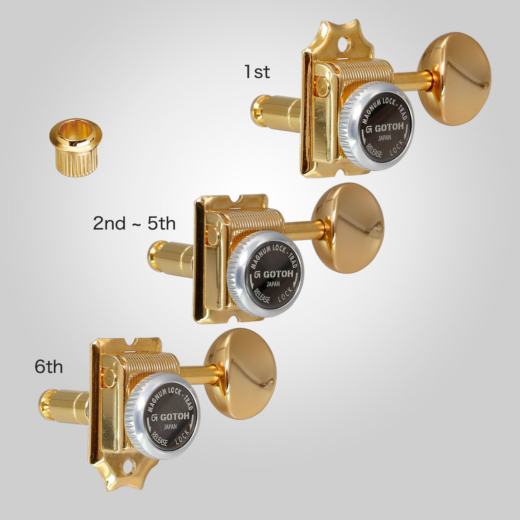
Needless to say, I ran to buy a brand new set of tuner and a tremolo. I made my research and found that the Gotoh 5105T-BS2 with 10.8 string spacing would match. For the tuners I measure everything and found that th SD91-G-T Magnum Locking tuners should do the trick. Both the tuner and the tremolo were available in golden finish. Finally, the Tusq XL String Trees should improve the tuning stability. I decided to leave the original nut since the specification states that is made of bone.
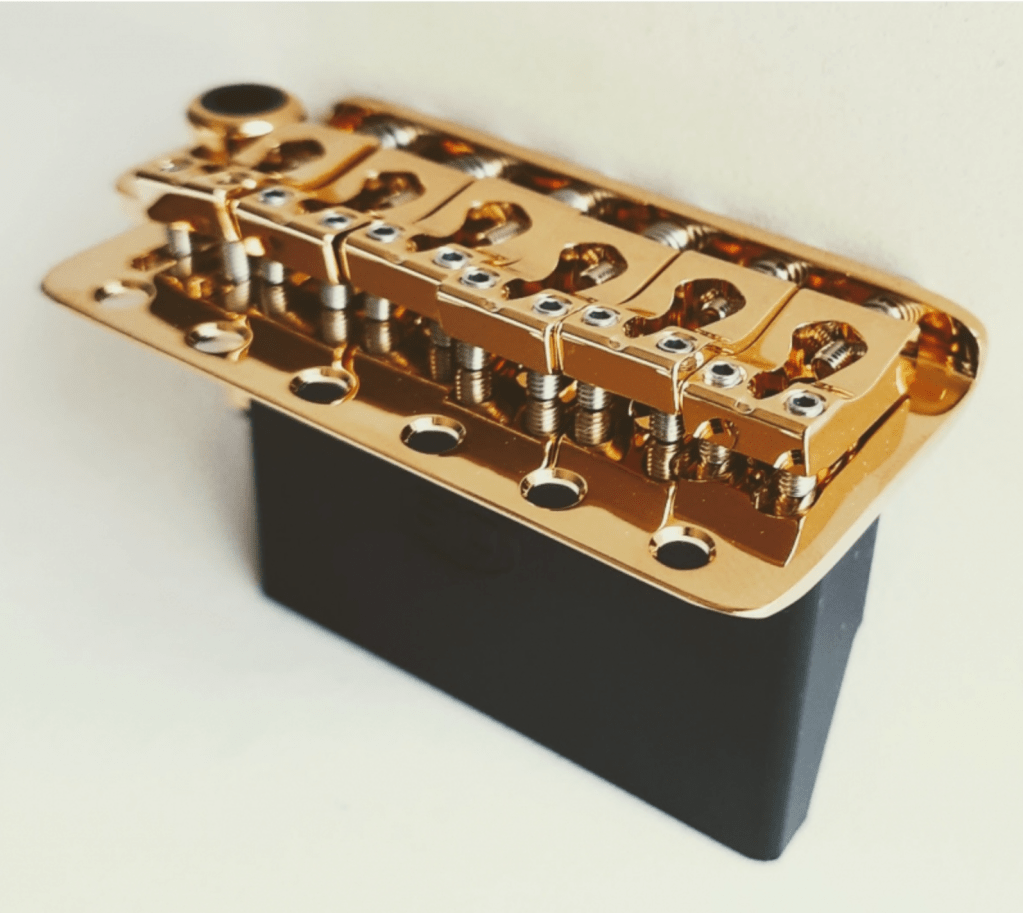
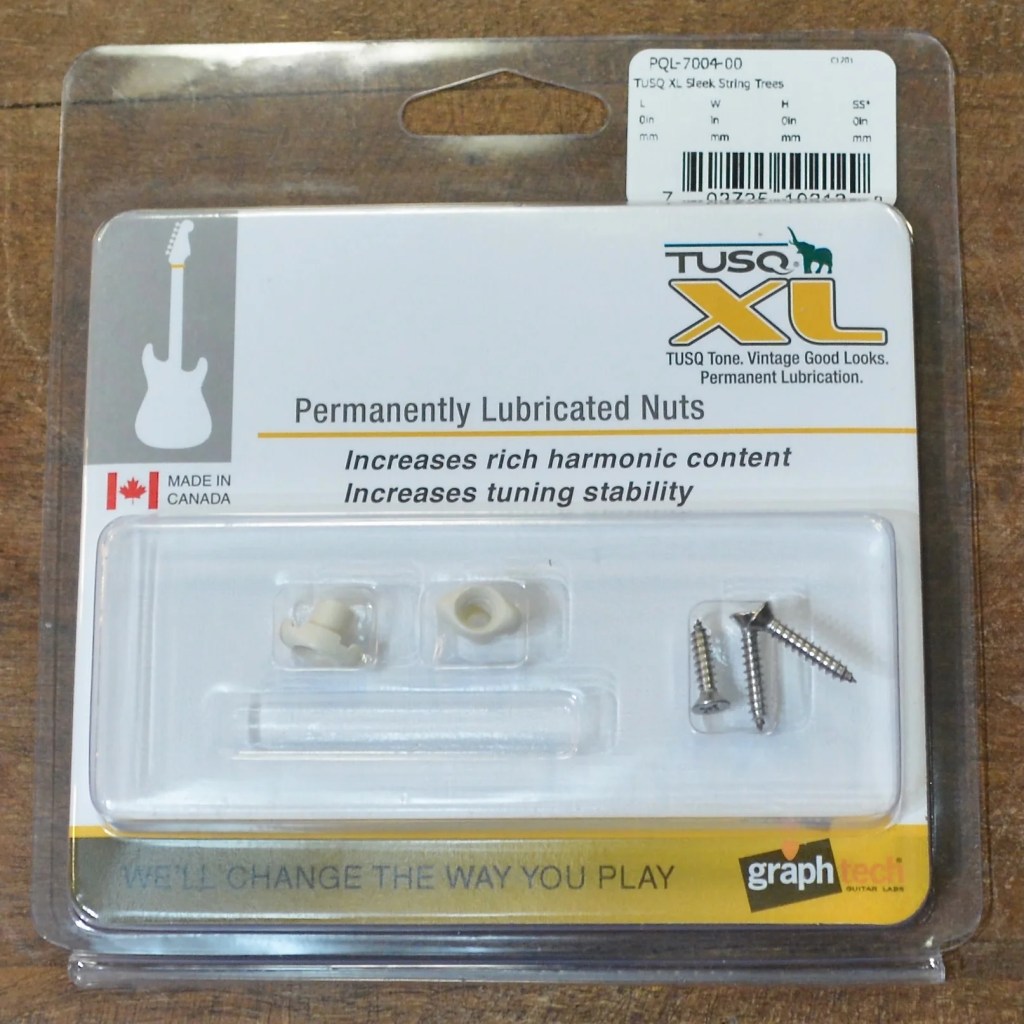
I mounted everything myself with the help of my youngest son, who’s 16. It turned out to be a super fun and memorable bonding experience. With the right tools, swapping out all the parts wasn’t difficult at all. I was pleasantly surprised by how well the tremolo bridge fit—it required almost no adjustment! I only needed to tweak the intonation on the 6th string, and to adjust the intonation.
After calibrating and fine-tuning everything, I was blown away by how much the guitar transformed. Oh man, what a difference! I gave the tremolo a real workout, and the tuning barely shifted—it was incredibly stable. The Gotoh Magnum Lock tuners, with their smooth 15:1 ratio, worked wonders by cutting down friction. The Tusq XL string tree fit perfectly and added even more tuning stability. But the real star was the new tremolo bridge. Compared to the stock tremolo, it’s like night and day. Everything about the aftermarket bridge—from the solid brass build to the flawless finish and the buttery smooth whammy bar—feels lightyears ahead. Playing this Squier now feels like playing a whole different guitar—smooth, responsive, and simply a dream.
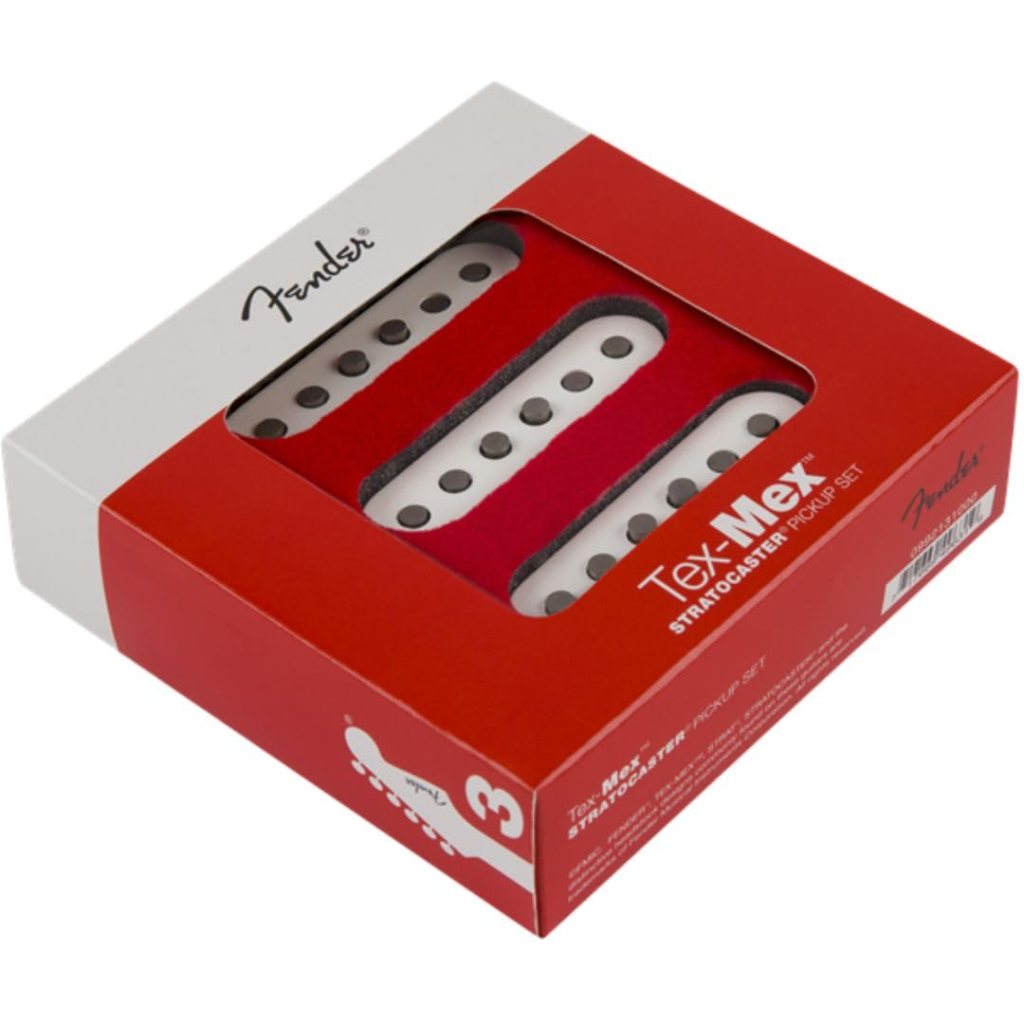
Although I liked the original pickups, I eventually decided to swap them for a set of Fender Tex-Mex. The whole process went surprisingly well—even though I’m no soldering expert, I managed a decent job. The result? A completely different playing experience, with noticeably higher output and, more importantly, a broader range of tones, dynamics, and character. Totally worth the time, effort, and money.
A Budget Guitar Turned Boutique Beast: Totally Worth the Upgrade
Would I recommend buying a guitar like this specifically for upgrading? Without a doubt—100% yes.
The Squier 40th Anniversary is a rock-solid platform for mods, and the parts alone cost me about two thirds the price of the guitar. I spent around $350 USD on three key upgrades, bringing the total investment to about $800. And for that price, I now have a top-tier Stratocaster guitar—with the added bonus of it being a limited-run Anniversary edition that looks stunning, sounds amazing, and stays perfectly in tune.
As a fun project, it was absolutely worth it. But more importantly, I ended up with a truly special instrument—one that not only looks great but plays and feels incredible. I’m beyond satisfied. Every penny spent was justified, and the whole process was deeply rewarding.
Best of all? You don’t need to be an expert luthier to pull this off. With my modest skills and limited experience, I was able to make all the mods myself. That gave me a deeper connection to the instrument and a better understanding of how it works.
With these top-tier specs in mind—premium tremolo system, locking tuners, and above-average pickups—the only Fender Stratocaster model that truly comes close right out of the box is the Fender American Ultra Stratocaster. However, all this comes at a price, and a hefty one at that: expect to pay around $2,000 USD.
So, if you find a Squier 40th Anniversary or any other unique, higher-end model in a brand’s lineup, don’t hesitate. With the right upgrades, you can confidently transform it into something that punches way above its weight. In my case, it wasn’t just worth it—it was one of the most satisfying guitar experiences I’ve ever had.
Pros & Cons of the Squier 40th Anniversary Stratocaster
Pros
- 40th Anniversary Mojo: The 40th Anniversary model is a limited-edition, commemorative guitar with unique aesthetics, including a special back plaque, anodized aluminum pickguard, and gold hardware, which add a classy vintage vibe.
- Nice paintjob: The Lake Placid Blue finish is flawless, with excellent attention to detail that makes the guitar look and feel more premium than its price tag suggests.
- Comfortable Body Design: True to the Stratocaster legacy, the Nyatoh body is lightweight and ergonomic, offering a warm, balanced tone and easy playability.
- Bright Alnico V Pickups: These pickups deliver a classic 70s Fender tone, especially suited for genres like funk, blues, and jazz. Positions 2, 3, and 4 on the 5-way selector provide tonal versatility that’s perfect for rhythmic and melodic playing.
- Solid Platform for Upgrades: The guitar’s body and neck serve as a reliable base for customization. With upgrades, it has the potential to become a truly unique and personalized instrument.
- Affordable Entry Point: At $450, it’s relatively inexpensive, allowing players to access a limited edition with potential for modification without an overwhelming investment.
Cons
- Tuning Stability Issues: The vintage tuners and stiff tremolo system struggle to maintain tuning, especially during tremolo use. Frequent retuning is necessary, making this a weak point that may require immediate upgrading for serious play.
- Stiff Tremolo Bridge: The whammy bar requires excessive force and could deter players who frequently rely on tremolo.
- Fretwork Needs Improvement: Rough edges and unpolished frets are noticeable drawbacks, detracting from the overall playing comfort and underscoring the difference between this model and higher-end American Stratocasters with hand-finished frets.
- Low-Output Pickups: While the pickups deliver a bright, vintage tone, they may lack the output some players desire for higher-gain or heavier genres. An overdrive pedal may be necessary to achieve a dirtier, more driven sound.
- Not Built for Speed: The glossy polyurethane finish on the C-shaped neck can make fast playing challenging, hindering shredders or players looking for smooth, effortless playability.
- Upgrade Costs Can Add Up: Enhancements such as replacing tuners, pickups, or tremolo parts can easily push the total investment close to or even beyond $750 which might not justify the initial affordability for some buyers.
- Availability: As a limited-run model from 2022, this 40th Anniversary guitar is becoming harder to find, which could make purchasing one more challenging if demand grows over time.
Conclusion: A Strat for the Collector and the Customizer
The Squier Stratocaster 40th Anniversary is an intriguing option for guitar lovers, offering limited-edition charm, 70s vintage-inspired aesthetics, and striking finishes—all without a hefty price tag. It’s a solid starting point with a well-built body and neck, but issues like tuning stability, fretwork, and tremolo functionality indicate that it’s not exactly ready to play right out of the box. Transforming it into a truly enjoyable instrument will take some time, effort, and investment. However, this guitar excels as a platform for customization, allowing for upgrades that can elevate its performance while proudly displaying its distinctive 40th Anniversary plaque.
If you are prepared to invest the necessary time and money for improvements, you can transform this guitar into a unique instrument that perfectly fits your style. On the flip side, if you’re looking for a more polished experience without any extra hassle and you don’t mind too much about the anniversary thing, other options in the same price range might suit you better. Ultimately, the Squier 40th Anniversary Stratocaster offers a delightful mix of nostalgia and the potential for hands-on refinement, appealing to players who appreciate character and the chance to truly make a guitar their own.
Guitar Specifications
Body:
- Type: Double-cutaway solid body
- Wood: Nyatoh
- Finish: Gloss
Neck:
- Shape: C
- Wood: Maple
- Joint: Bolt-on
- Scale length: 25.5″
- Truss rod: Standard
- Finish: Gloss
Fingerboard:
- Material: Laurel
- Fret size: Narrow-tall
- Number of frets: 21
- Inlays: Pearloid block
- Nut width: 1.65 in. (42 mm)
- Nut material: Bone
Electronics:
- Pickup configuration: SSS (Single-Single-Single)
- Neck pickup: Proprietary single coil
- Middle pickup: Proprietary single coil
- Bridge pickup: Proprietary single coil
- Control layout: Master volume, Individual tone (x2)
- Pickup switch: 5-way
Hardware:
- Bridge type: Tremolo/Vibrato
- Bridge design: 6-point tremolo
- Tailpiece: String-thru body
- Tuning machines: Vintage-style
- Hardware color: Gold

 oscaronguitars.com
Leave a reply to PRS SE NF3 Review: A Modern Spin on Classic Single-Coil Tones – oscaronguitars.com Cancel reply