
This is an In-Depth review. If you are in a hurry, you can read my concise review here.
I was on the hunt for that classic single-coil sound: punchy and dynamic, but not overpowering—versatile enough to handle anything I threw at it. A mythical unicorn, right? Enter the PRS SE NF3, a true game-changer. With its silent pickups and dynamic tone, it completely redefines expectations. PRS’s innovative DD (Deep Dish) Narrowfield (NF3) pickups promised to deliver a noiseless single-coil experience with higher output, blending single-coil tones with PRS’s unmistakable craftsmanship. The bolt-on design, paired with modern engineering, felt like the perfect balance of tradition and innovation—a fresh take on classic tones.
For months, I’d been waiting for the PRS SE NF3 to land in my country. Finally, the wait ended. A visit to my local guitar shop later, I walked out holding a stunning PRS SE NF3 in Ice Blue Metallic. Was it what I was expecting? Let me share my experience with you.

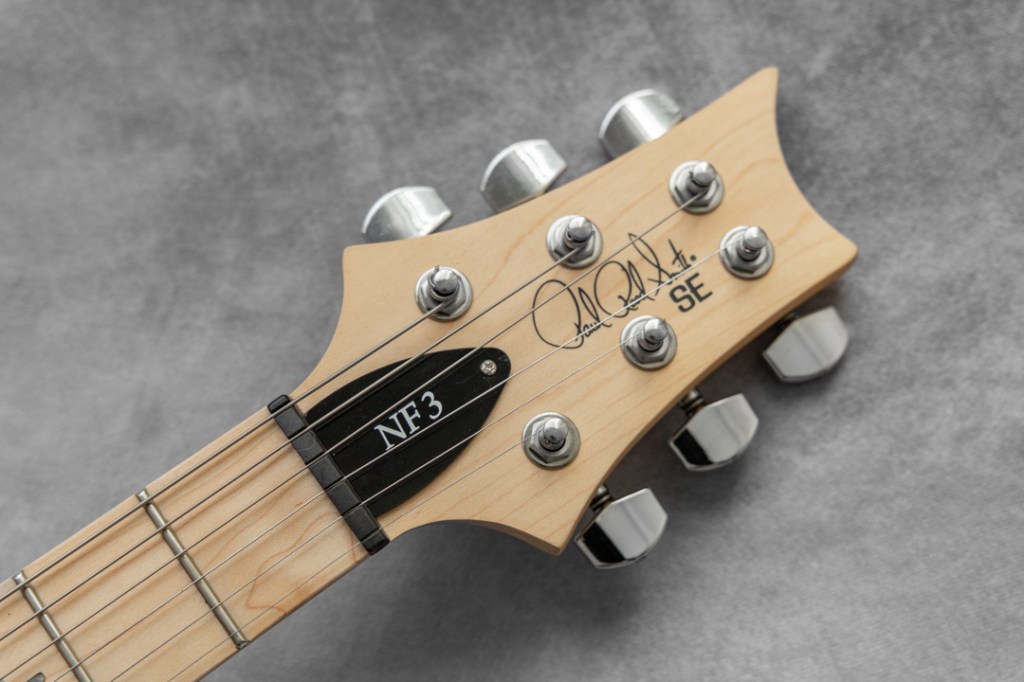
Headstock and Neck
The headstock showcases the signature PRS design—elegant, well-balanced, and undeniably distinctive. It’s a feature I’ve always appreciated, not just for its aesthetics but also for its role in the guitar’s excellent tuning stability—a noteworthy achievement in itself.
That said, my thoughts on the PRS sealed tuners used in the SE series are a bit mixed. While they are dependable and perform OK, they lack a premium feel. If you’re thinking of upgrades to enhance the guitar, the tuners would be my first suggestion. The aftermarket PRS SE locking tuners are a perfect fit; they can be easily replaced, enhancing the already good tuning stability, making string changes effortless, and they are incredibly easy to change. It’s not an urgent necessity, but certainly something to consider if you’re aiming for a higher-end experience.
The proprietary PRS self-lubricating nut is a standout feature—it aims to preserve the tonal characteristics of bone while enhancing tuning stability. In theory, swapping in PRS SE locking tuners could further improve tuning reliability. However, after months of daily playing—including plenty of aggressive tremolo use—I’ve been genuinely impressed by how well this guitar holds its tuning. While some players criticize the stock PRS SE tuners for lacking a high-end feel, I’ve found them perfectly adequate. That said, upgrading to PRS SE locking tuners does offer a noticeable improvement in feel and makes string changes significantly quicker and easier. It’s an affordable, beginner-friendly mod that requires only basic tools—and in my opinion, it’s absolutely worth it.
Fretboard Options
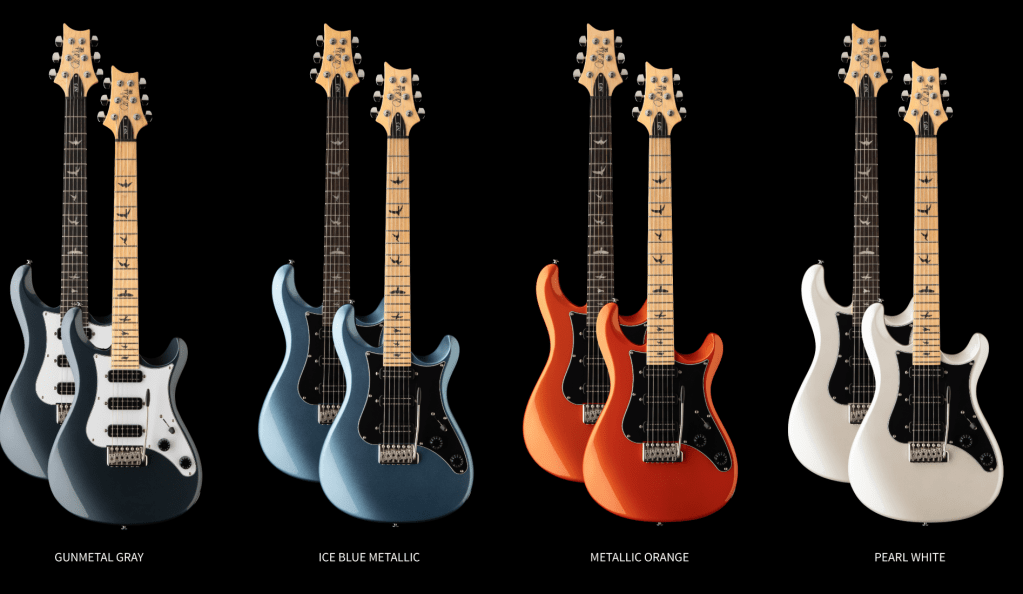
The NF3 model’s color options and choice of rosewood or maple fretboards in all finishes are notable. This flexibility is a welcome touch, and regarding the rosewood, it’s especially nice considering the scarcity and regulatory challenges surrounding this wood. Its inclusion feels like a nod to luxury compared to the Indian Laurel or Jatoba fretboards often found in budget models from brands like Squier or Epiphone.
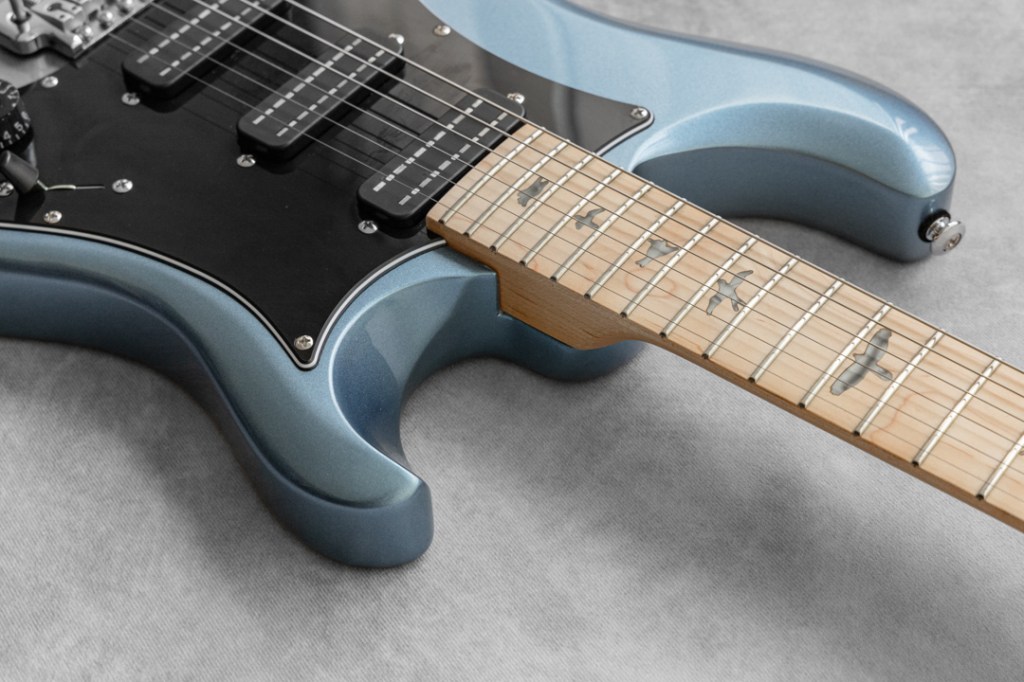
Since I already own a PRS SE Custom 24 and a PRS SE DGT, both with rosewood fretboards, I decided it was time for a change. The maple fretboard option stood out not only for its sleek aesthetics but also for the striking gray bird inlays, adding a unique flair to the guitar. It’s unmistakably PRS, yet with a fresh twist rarely seen in this color combination.
I absolutely loved all the color options. It’s the complete opposite of how I feel about the Silver Sky lineup, where none of the colors really click for me. With the PRS SE NF3, there’s something for everyone—from the bold metallic orange to the sleek gunmetal gray. Even the pearl white, which I’m usually not drawn to, looks fantastic.
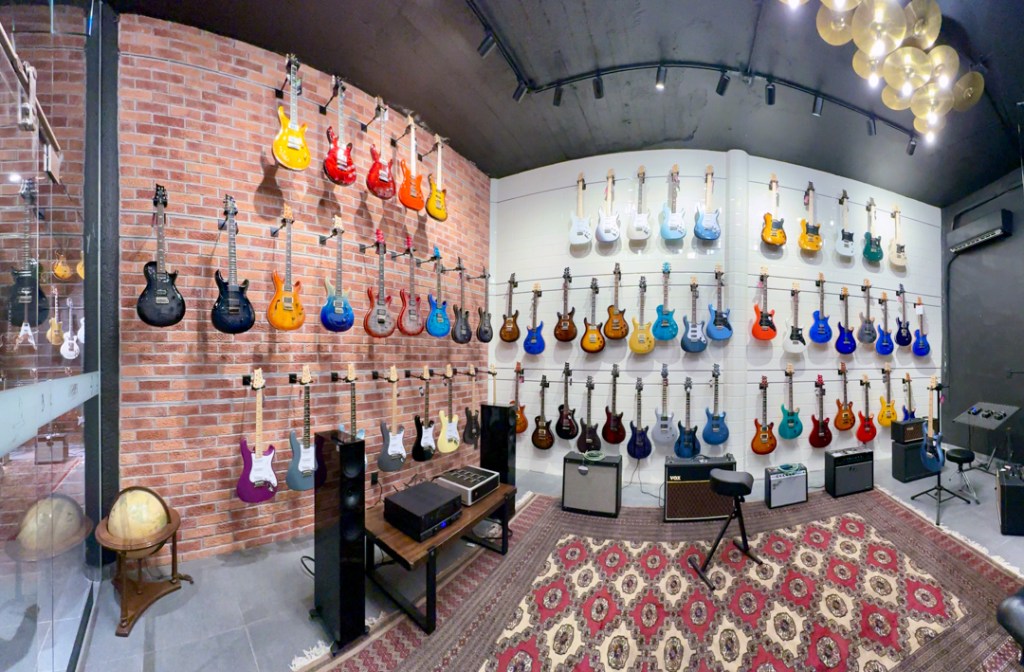
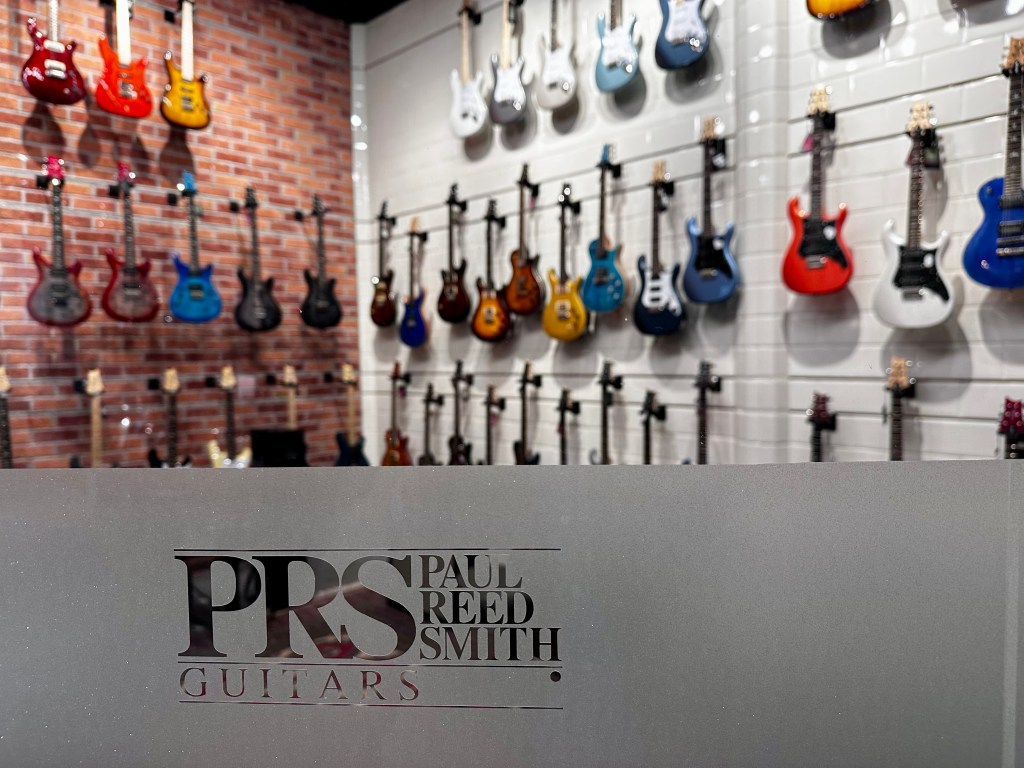
Fortunately, at Eusica, my nearest PRS dealer had every variation in stock, so I was able to test both a rosewood and a maple version of the Ice Blue Metallic finish. Ultimately, I chose the maple fretboard for its visual contrast and variety, and I couldn’t be happier with the decision.
Curious about the tonal differences between rosewood and maple on the PRS SE NF3? Watch this video and hear it for yourself.
Neck and Fretwork
The neck on the NF3 features 22 frets, all easily accessible and comfortable to navigate. Personally, I find this more than sufficient, but it’s worth considering whether you’d prefer the extended range of a 24-fret setup. The guitar maintains PRS’s signature 25” scale length, which strikes an excellent balance between playability and comfort. I was surprised by the slightly thicker 10-46 strings, but paired with the long scale, the feel is firm but not overly stiff, which I liked.
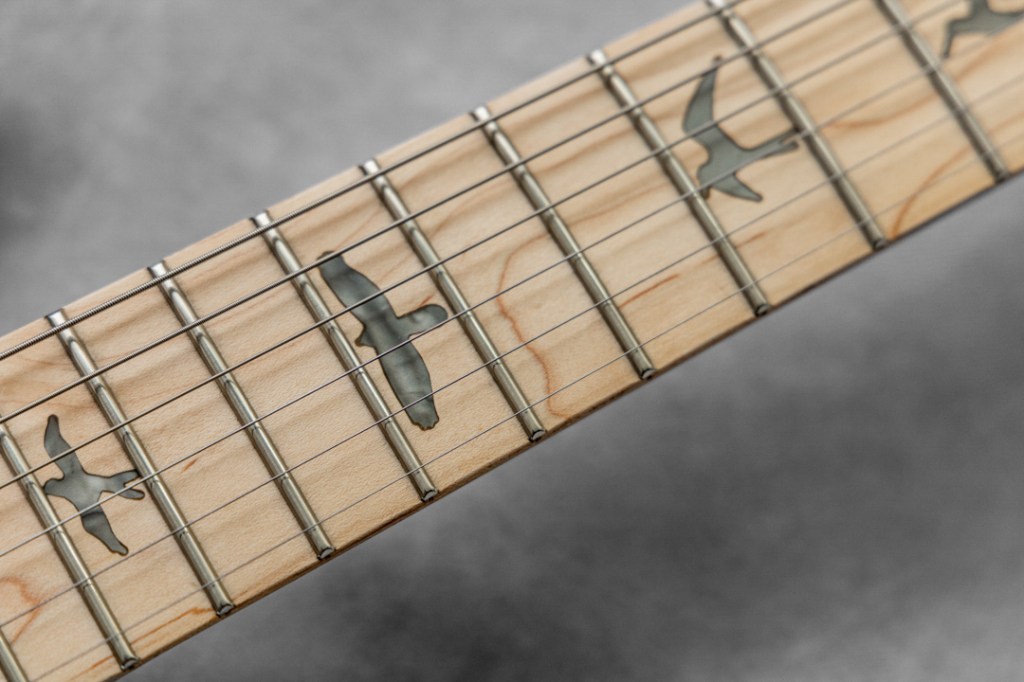
What truly stands out is the impeccable fretwork. The medium-jumbo frets are flawlessly leveled, polished to a mirror-like shine, and free of sharp edges—a level of craftsmanship that sets this guitar apart. It’s a stark contrast to the often rough or inconsistent fretwork found on budget models from brands like Squier or Epiphone. The Indonesian-made Cor-Tek craftsmanship shines here, delivering a neck that feels broken-in from the moment you pick it up. It’s effortless and enjoyable to play right out of the box.
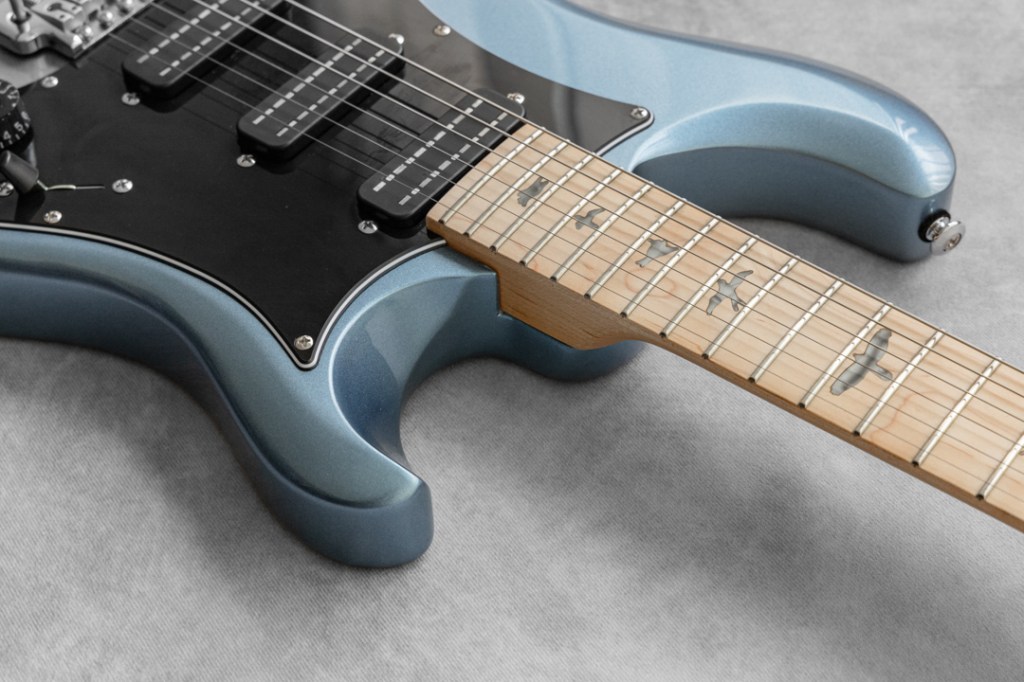
A key detail worth highlighting is the aesthetic appeal of the maple fretboard. Unlike the plain maple found on many other guitars, this one features a subtle quilted texture—a natural pattern that reflects PRS’s attention to both function and beauty. It’s a refined touch that elevates the visual experience, quietly signaling: this guitar is special.
Another standout feature is the grey bird inlays. They have an intriguing, almost dynamic texture that shifts depending on the angle of the light, adding a unique visual dimension to the instrument. It’s these thoughtful details that create a distinct PRS experience—one that I’ve truly come to appreciate.
The satin finish and wide-thin neck shape deliver exceptional comfort and versatility, making it ideal for fast, fluid playing. Straight out of the box, the action was perfect—low and buzz-free across the fretboard. While it might not be the fastest neck out there, it strikes an excellent balance: not overly chunky like vintage-inspired models, yet not ultra-slim either. It’s a sweet spot that feels just right and should appeal to a broad range of players.
When I chose the maple fingerboard, I was a bit concerned about it getting dirty quickly. My Charvel Pro Mod Style 1 San Dimas HH FR has a maple board, and it seems to pick up grime almost instantly after I play. However, whatever finish PRS uses on this fingerboard works wonders—despite playing the guitar daily for long hours, it hardly ever needs cleaning. I’m not sure if the Charvel’s fingerboard is simply more porous or if PRS has a superior sealing process, but this difference genuinely caught me by surprise.
Body
The first thing that stood out when I picked it up was that the guitar didn’t feel heavy. While it’s not particularly lightweight—it’s more in the average range—I was pleasantly surprised by how manageable it felt. The poplar body strikes a great balance: it’s affordable, tonally versatile, and comfortable enough for long playing sessions without wearing you down. It’s a well-thought-out design that makes playing a real pleasure.
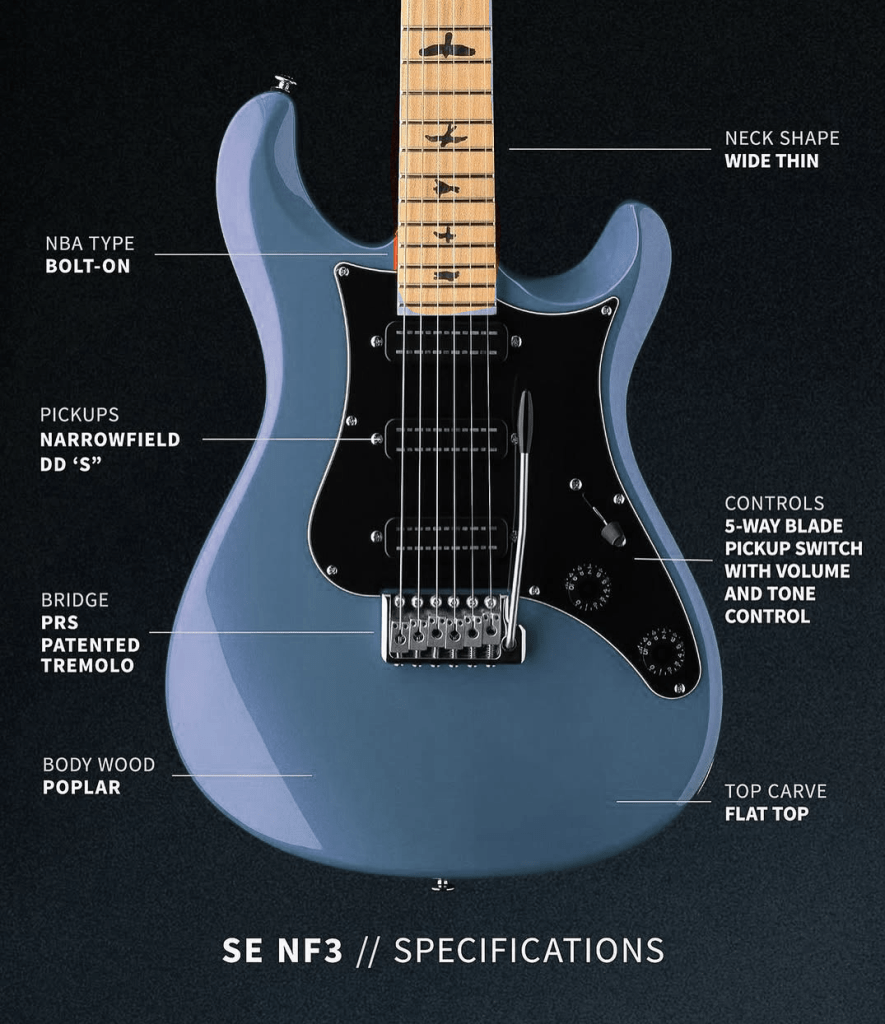
The seamless combination of the body and neck doesn’t just elevate the tone—it also helps keep the guitar more budget-friendly. Surprisingly, I don’t find myself missing the neck-through construction at all; this bolt-on design feels just right.
The Indonesian craftsmanship truly stands out, especially in the body’s flawless finish and impeccable paint job—it’s genuinely impressive. And I don’t say that lightly. With confidence in Cor-Tek’s manufacturing, I also picked up a Cort X300 with a metallic finish, which gave me the chance to directly compare the craftsmanship of both guitars. The difference was clear: while the Cort is decent for its price (about half of the PRS SE NF3), it has some noticeable imperfections and feels a bit rough in certain areas. This comparison gave me a new appreciation for PRS’s commitment to quality control and their insistence on ensuring that every SE model meets the rigorous standards of the Maryland-based brand. So no, buying an SE doesn’t mean you’re getting just another mass-produced Cor-Tek guitar—it’s a genuine PRS, built to the highest standards. And with this guitar, that’s evident in every detail.
While all the available colors are striking, the Ice Blue Metallic stole my heart at first glance. Though the orange finish isn’t my personal favorite, I can see it being a hit with others that seek a more strikingly looking and exciting instrument. The gray option is undeniably sleek, but I found the white pickguard a bit underwhelming. In contrast, the slightly understated Ice Blue Metallic finish paired with a black pickguard, black pickups, and the lighter maple neck creates a visually stunning combination. That said, the rosewood fretboard versions exude their own sense of elegance, offering a classic yet refined aesthetic.
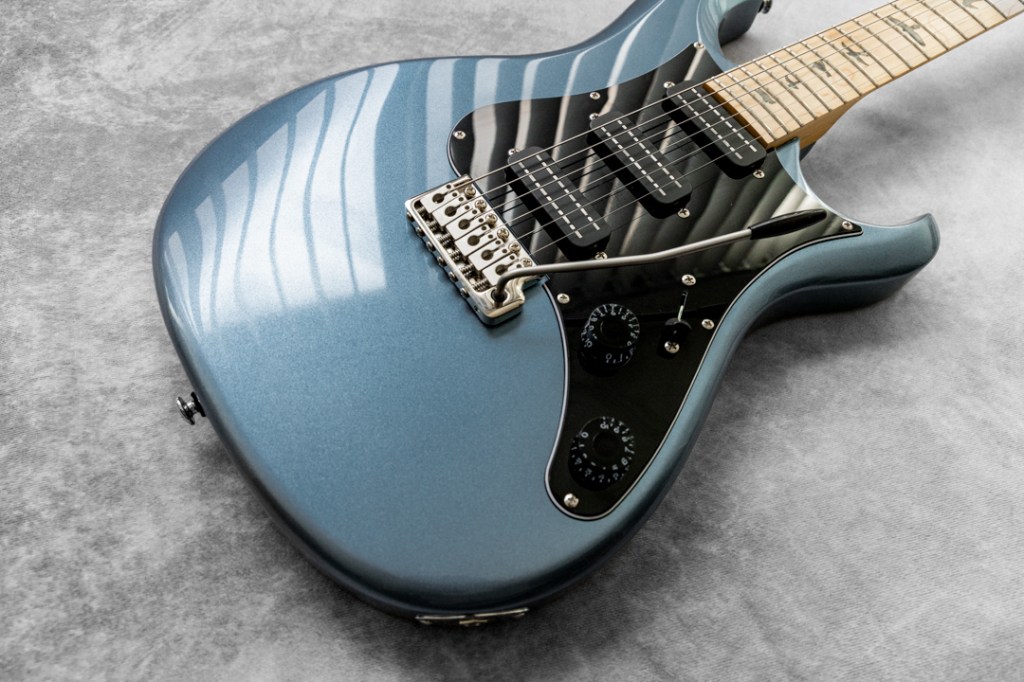
I have to give special credit to the paintwork—it’s absolutely outstanding. No matter which color you choose, the finish is stunningly applied with meticulous attention to detail. Metallic finishes, in particular, are notoriously unforgiving, as even the tiniest flaws can be glaring. Yet, every model I tested (and I tried quite a few) was flawlessly executed.
While PRS is best known for its breathtaking quilted and figured tops, the flat color finish on these guitars offers something entirely different—and it’s far from disappointing. The metallic sheen, though hard to fully capture in photos, truly shines in person with a subtle yet refined brilliance that immediately sets it apart. Unlike some of PRS’s more understated finishes, like the golden hue of the PRS SE DGT, these metallic colors are vibrant and eye-catching, striking a perfect balance between boldness and elegance. They manage to be distinctive without crossing into flashy territory, making them a masterclass in design and craftsmanship. This thoughtful approach creates a unique aesthetic that elevates the guitar beyond the ordinary, blending sophistication with just the right amount of flair.

The Elephant in the Room: A Stratocaster Clone?
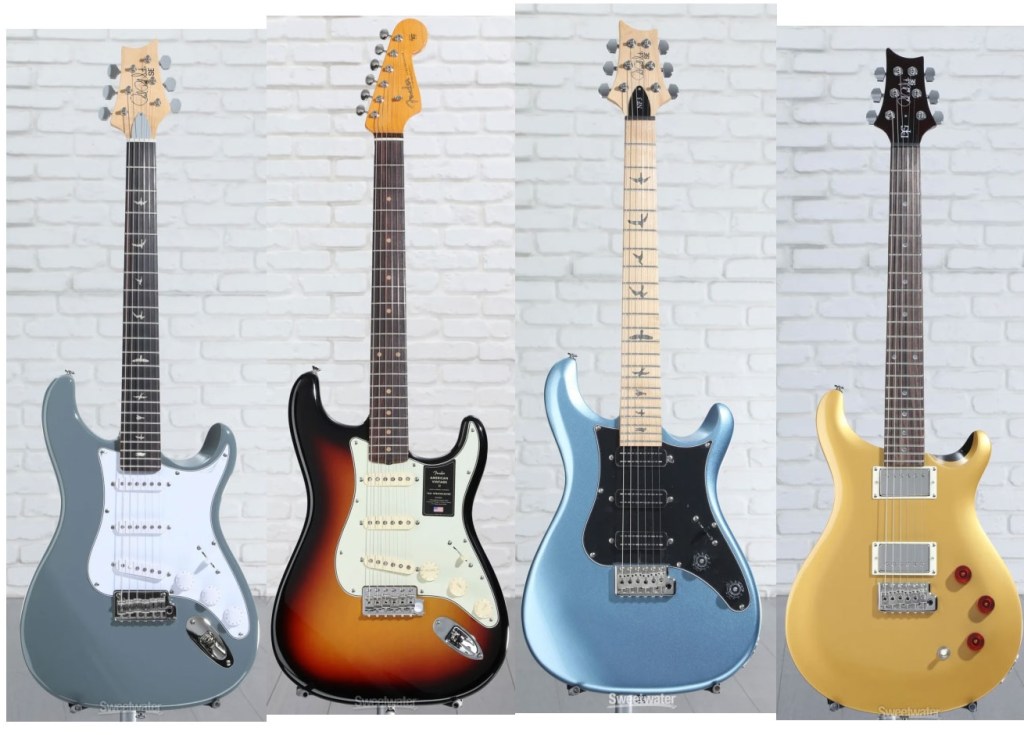
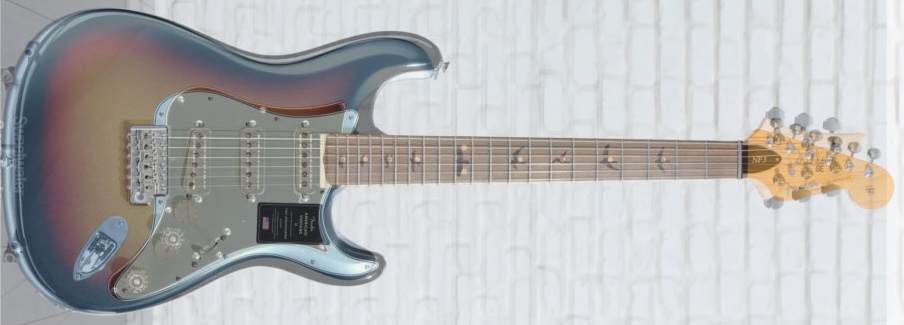
The PRS SE NF3 often draws criticism for being too derivative of the classic Stratocaster design—and, to be fair, it’s easy to see why. The differences from a traditional “S-Style” guitar are subtle at best. Claiming the NF3 offers any groundbreaking design elements would be a stretch. Let’s face it: the Stratocaster’s iconic shape has endured for over 70 years, remaining as fresh and relevant today as it was when it first debuted. For many players (myself included), it’s the ultimate blend of aesthetics and ergonomics—a tough act to improve upon.
That said, the NF3 does introduce a few thoughtful tweaks. The slight chamfering on both horns adds a modern edge, giving it a sleek, contemporary vibe. However, the use of a pickguard-mounted pickup system, as opposed to PRS’s usual direct-mounted pickups, only reinforces the similarity to the Strat. So, does it feel like a copy? Honestly, yes—it comes very close.
But as French filmmaker Jean-Luc Godard famously said, “It’s not where you take things from—it’s where you take them to.” In that sense, PRS took the Stratocaster’s essence and gave it a new direction. It may not be revolutionary, but it’s certainly an interesting reinterpretation of a timeless design.
Similar to a Strat, the NF3 boasts a contoured body that’s exceptionally comfortable. However, PRS takes it a step further with its thoughtfully sculpted horn cuts, making upper fret access effortless. The well-placed belly cut molds naturally to your body, enhancing comfort whether you’re standing or seated. Additionally, the smoothly rounded edges offer a soft, inviting feel, making it a joy to play for extended sessions.
Ultimately, it offers the best of both worlds. If you’re a fan of PRS’s signature 25″ scale, you’ll feel right at home. And if you’re coming from a Strat, the body design will feel like a seamless fit.
No Silver Sky Clone Either
The NF3 isn’t a Stratocaster clone, nor is it simply a Silver Sky replica. Here are the key differences, and many of them are quite significant:
| Feature | PRS SE NF3 | PRS Silver Sky |
|---|---|---|
| Headstock | Standard PRS | Reversed PRS |
| Scale Length | 635mm (25 inches) | 648mm (25.5 inches) |
| Fingerboard Radius | 254mm (10 inches) | 216mm (8.5 inches) |
| Vibrato System | PRS SE vibrato (6-point) | PRS USA 2-post vibrato |
| Controls | Master volume and tone with 5-way pickup switch | Volume and two tone controls with 5-way blade switch |
| Pickups | PRS NF3 “S” pickups (noiseless single-coil) | John Mayer-designed single-coil pickups |
The SE NF3’s body design leans slightly closer to the PRS Fiore Mark Lettieri Signature model, which carries a steep $2,699 price tag. However, the Fiore distinguishes itself with features like direct-mount pickups, an H-S-S configuration, a longer 25.5″ scale length, a two-point tremolo, and vintage-style tuners. While the NF3’s body shape does share some similarities with the Fiore—more so than with the Silver Sky—it’s not an exact match. Perhaps the upper horn chamfer is what makes the resemblance more apparent.
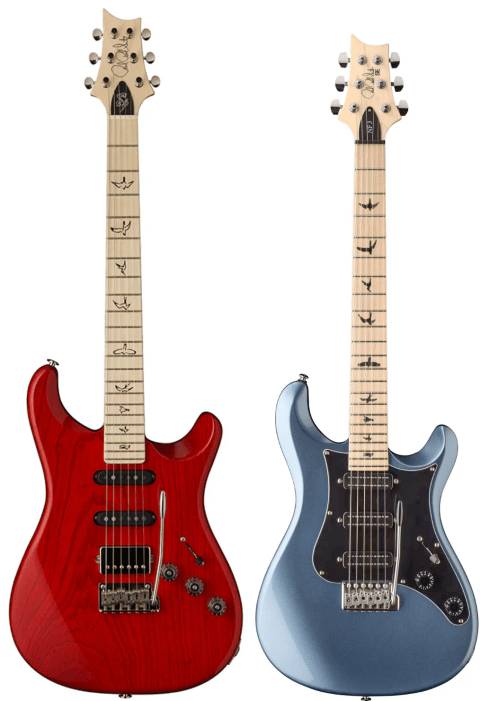
All things considered, the PRS SE NF3 feels more like a Strat reimagined for loyal PRS players rather than a PRS built to convert die-hard Fender enthusiasts.
Tremolo and Control Knobs
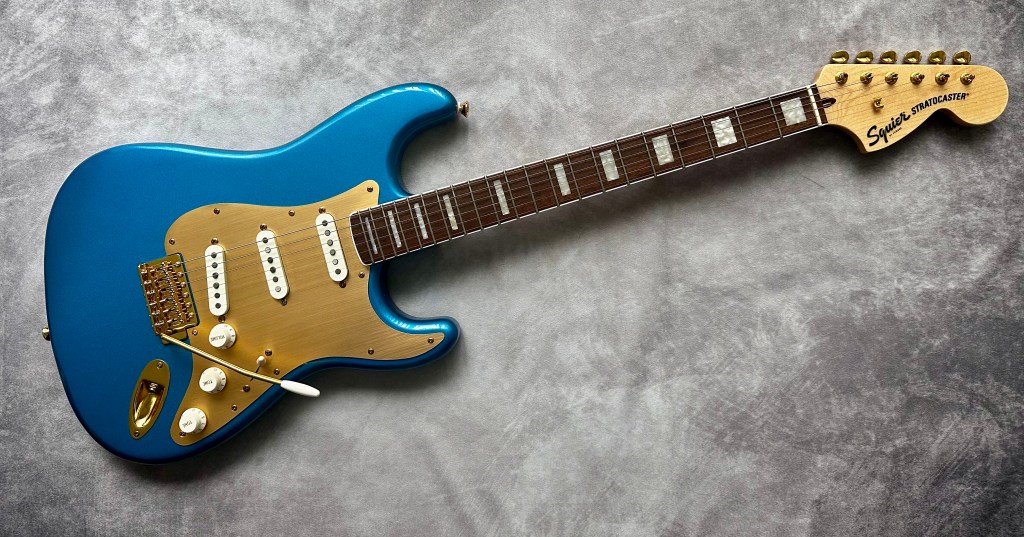
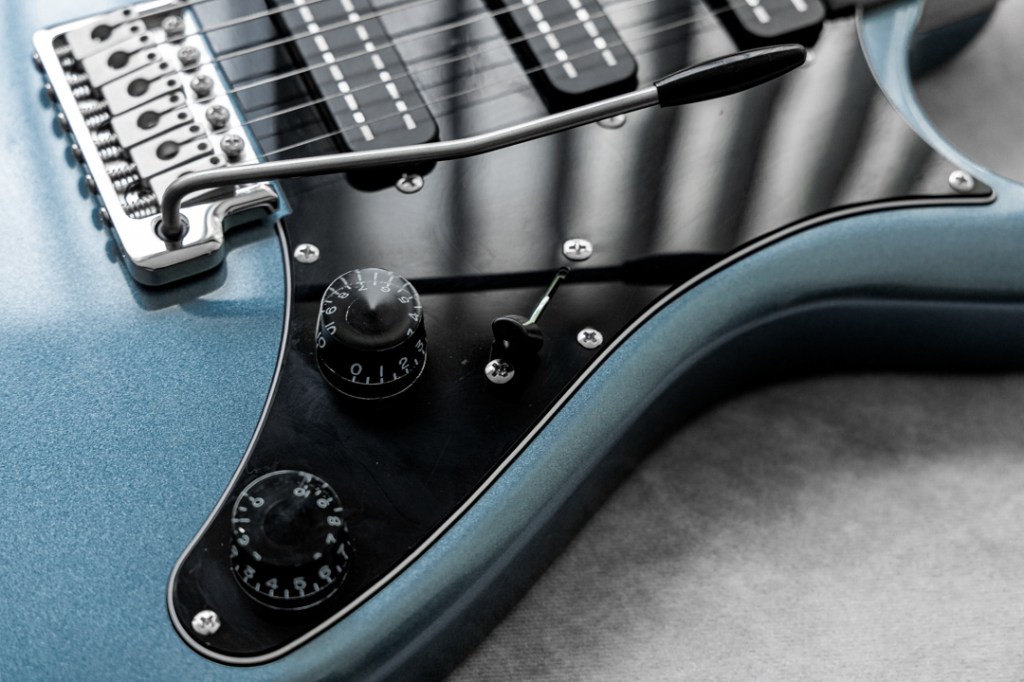
Even without touching the tremolo, maintaining the tune of my recently purchased Squier 40th Anniversary Stratocaster has proven to be a challenge! To fix this, I got aftermarket Gotoh locking tuners and a vintage-style tremolo bridge in it. It worked wonderfully, but it was a bit of a hassle installing the tremolo system, and it added about $250 to the original price. That’s where PRS stands out. Paul Reed Smith designed a tremolo that’s not only a functional improvement but also an impressive piece of engineering that often goes underappreciated. And you just don’t need to change it because it does a fantastic job.
I have to emphasize just how rock-solid the PRS-patented tremolo is. It easily outperforms the traditional Strat-style bridge, and when combined with the graphite nut and PRS’s uniquely angled headstock, it creates an incredibly stable setup. While it’s not designed for extreme dive bombs like a Floyd Rose, it strikes the perfect balance between precision and control, allowing for everything from subtle vibrato to more aggressive bends without compromising tuning. I even pushed it beyond normal use, and to my surprise, the tuning stayed perfectly intact. That level of reliability is truly impressive!
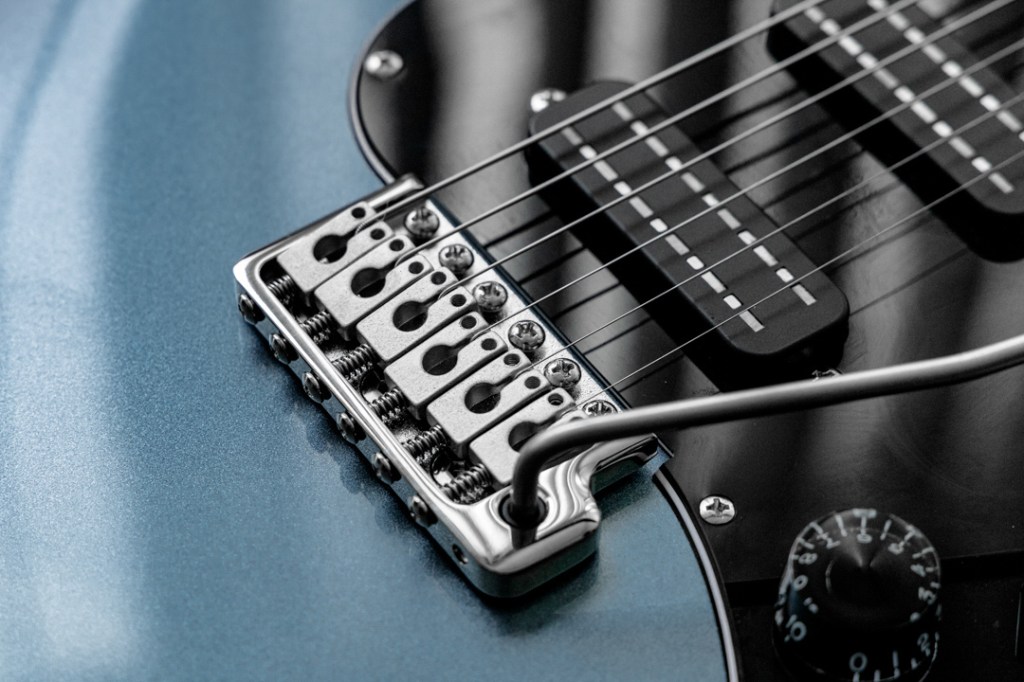
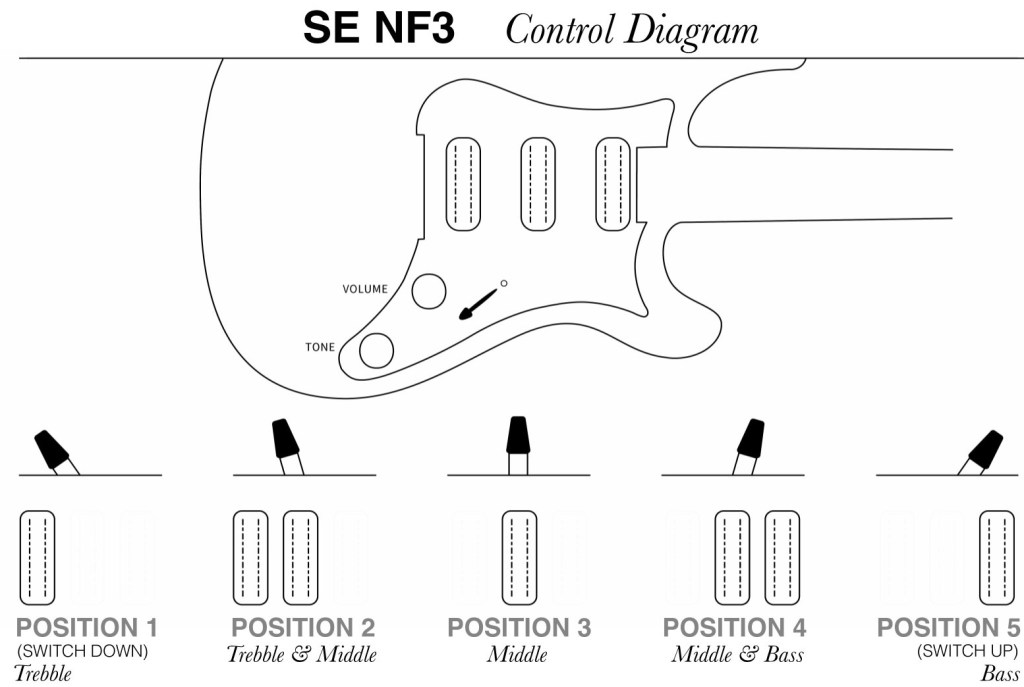
Before diving into the standout feature of this guitar—the electronics—let’s take a moment to appreciate some thoughtful design details that elevate its overall appeal. The tone and volume knobs are sleek, well-crafted, and smooth to operate, offering just one of each for a clean and intuitive layout. A subtle yet practical touch is the uniquely shaped plastic tip on the 5-way selector. Departing from the standard Strat-style tip, this design is easier to grip and has a touch of Telecaster-inspired charm. Keeping it simple, the NF3 features only master tone and volume controls, adding to its minimalist elegance.
While I personally prefer direct-mount pickups over a pickguard, the pickguard setup here is entirely functional and doesn’t detract from the guitar’s usability. It’s a practical choice that works well with the overall design.
The DD NF3 Pickups
Let’s be honest—while all the other features are impressive, they aren’t the reason this guitar caught my attention. The real draw lies in the innovative pickups. Paul Reed Smith and his team have developed a new kind of pickup that’s nothing short of fascinating. Paul, not only a luthier with over 40 years of experience, meticulously engineers every aspect of these pickups for tonal excellence through his analytical approach to guitar design..
PRS has a long history of experimenting with nearly every pickup style imaginable—humbuckers, single-coils, P-90s, PAFs—and mastering each one. Paul Reed Smith understands the allure of the perfect single-coil tone, along with the challenges that come with it, like unwanted noise. Enter the NF3 pickups, a culmination of years of expertise. These pickups deliver a rare combination: noiseless performance paired with a bright, articulate single-coil sound. They also pack enough punch to push your amp into crunchy, overdriven territory when you need that extra edge.
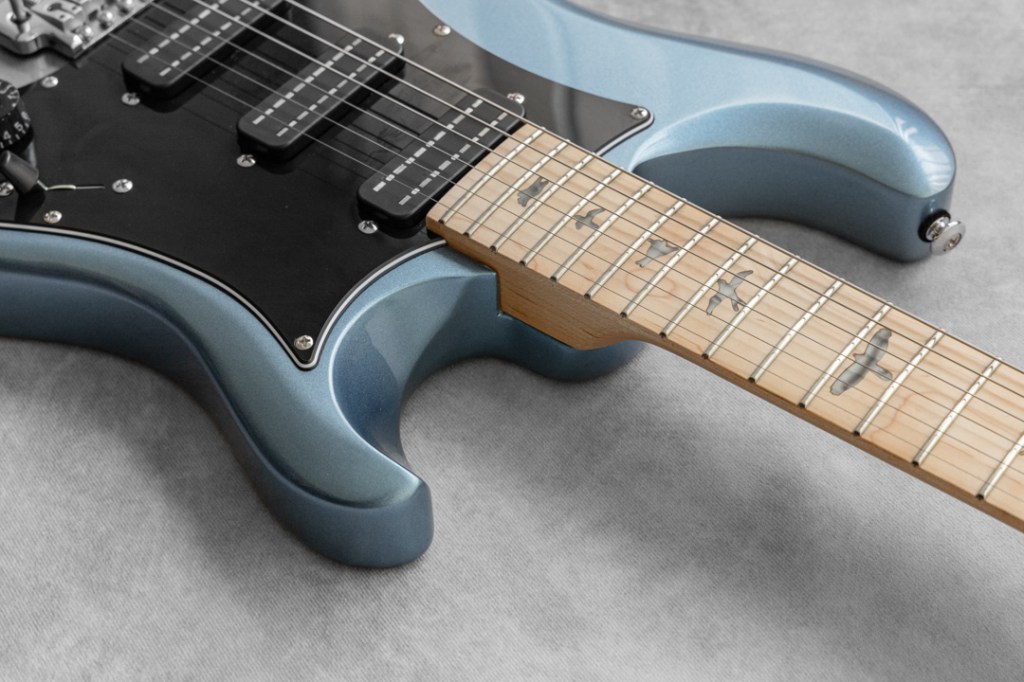
The NF3 pickups are remarkably close to capturing the classic Strat sound without simply copying it. They’re impressively clear, dynamic, and just the right level of loud—extremely versatile. The “S” iteration of this guitar features the Narrow Field design, which traces its roots back to the NF 53, blending the best of PRS’s innovation and expertise. It’s a true testament to how PRS has redefined the possibilities of pickup design.
The Narrowfield DD (Double Dish) “S” pickups feature taller bobbins, allowing for more windings and additional metal components between the magnets. This design aims to produce a more powerful and focused tone.
The result is a sound that combines the clarity and articulation of traditional single coils with the noise-canceling benefits of humbuckers. Developed by PRS as an evolution of their iconic 57/08 pickups, the Narrowfields excel in genres that require tonal versatility. Their design ensures rich harmonic content and pinpoint precision, making the NF3 a highly adaptable instrument suitable for a wide range of musical styles.
PRS has mastered the art of balancing humbucker and single-coil tones, offering not just versatility but a truly musical experience. The SE NF3 is capable of transitions from a warm, full-bodied ‘single-coil’ sound to a distortion-friendly beast capable of delivering high-gain power with clarity and punch. Rolling down the tone and volume dials produces a more classic humbucker vibe, while pushing them back up shifts to a richer, Fender-like character.
To truly appreciate the full tonal range offered by the NF3 pickups, it’s well worth spending time experimenting with different volume levels and tone control combinations. The versatility is genuinely impressive.
My Take on the NF3
In my view, this guitar is clearly centered around its pickups, and that’s far from a negative—it’s actually a major strength. The reason I bought this guitar in the first place was the NF3 “S” pickups, and I can confidently say they’ve exceeded my expectations.
My first impression of the NF3 was its strikingly bright tone. It delivers a crisp, sparkling sound with a strong emphasis on mids and higher frequencies. One key aspect of the sparkle in this guitar’s sound is that, for me, it’s always better to have a bright tone that can be dialed back, rather than one that’s too mellow to push forward when needed. While I expected the typical brightness of a single-coil, the NF3 stands out with its higher output, which can easily be dialed back using the volume control. If you’re looking for a more muted, bass-heavy sound, the tone control offers a wide range—allowing you to shift from bright and sparkly to a more humbucker-like warmth. The 5-way switch lets you fine-tune your tone to perfection, offering just the right balance for any playing style.
As a funk enthusiast, I had gradually drifted away from the genre, largely because most of my guitars lean toward a darker, humbucker-driven tone. But with this guitar? Wow. It’s a funk powerhouse, reigniting my passion for the genre with its crisp, captivating sound. The tone cuts through the mix effortlessly, delivering the clarity and punch that funky grooves and rhythmic playing demand. Positions 2 and 4 on the 5-way selector are especially perfect for dialing in those iconic funk tones.
I matched the NF3 tone with my Yamaha RGX-TT, equipped with Seymour Duncan Hot Rails, when comparing the output. The Hot Rails exhibit a notable aggressiveness and have the potential to become excessively loud, while the NF3 pickups provide the ideal punch without going overboard. Even at lower volume, the Hot Rails tend to scream constantly, while the PRS maintains a dynamic and controlled tone. In short, the PRS offers a tone that’s just right—not too loud, but certainly powerful.
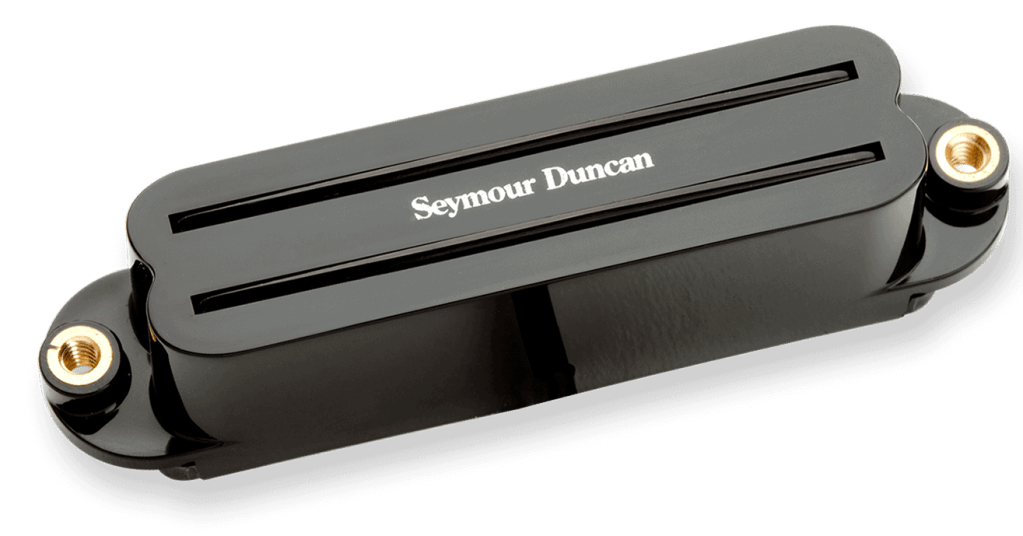
While the Hot Rails might feel like a Stratocaster on steroids, the PRS SE NF3 is more like someone who’s hit the gym hard—strong, toned, and remarkably agile. Its true strength lies in its versatility; it’s less of a bodybuilder and more of a triathlete—balanced, adaptable, and capable of taking on any musical challenge with ease.
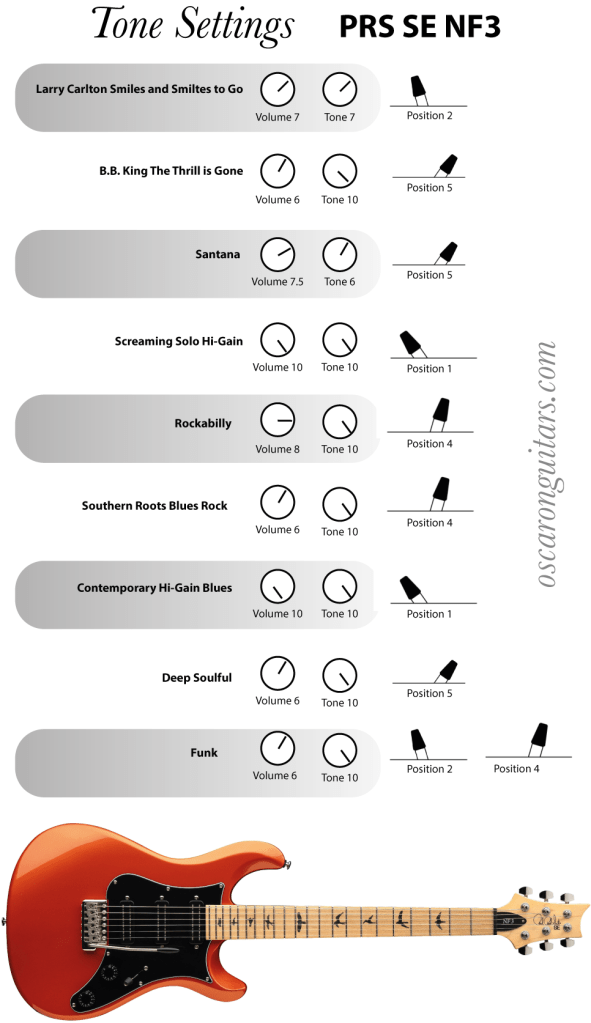
I find this guitar versatile enough to handle a wide range of genres with ease. For blues, it leans more towards the fiery tones of Stevie Ray Vaughan or Buddy Guy, rather than the smoother, more soulful sound of B.B. King—though a bit of experimentation with the tone knob can bring out a warmer, bassier sound. In jazz, it’s closer to Jeff Beck’s rich, expressive tones than the traditional, clean style of players like Joe Pass. That said, I successfully recreated Larry Carlton’s signature Gibson 335 tone in Smiles and Smiles to Go and B.B. King’s The Thrill is Gone wich speaks of how versatile the NF3 may be if you spend enough time tweaking and refining your tone. After spending time exploring different situations, genres, and styles, I was genuinely impressed by the NF3’s remarkable versatility.
Here I made a little chart with my volume, tone, and switch position for different styles:
What about metal? While I’m not a metalhead and can’t offer firsthand experience, it’s worth remembering that legends like Yngwie Malmsteen and Dave Murray have shown single coils can shine in the genre—and this guitar should be no exception. One thing’s for sure: crank up the gain, sprinkle in some delay, and aim for an Eric Johnson vibe—you’ll have Cliffs of Dover dialed in perfectly.
Refining Tradition with Elegance and Precision
Let’s be real: the idea of a humbucking noise-cancelling pickup with the character of a single coil isn’t groundbreaking. But then again, neither is making guitars. When Paul Reed Smith began his journey into guitar making, he wasn’t trying to reinvent the wheel. Instead, he had a vision—a clear sense of what was missing from the traditional offerings of Gibson and Fender. His approach was straightforward but ambitious: guitars that looked great, felt great, and sounded exceptional. And boy, did he deliver.
I’ve yet to see a PRS guitar that doesn’t look stunning. Sure, some models might resonate with me more than others, but all of them turn heads. Comfort? Nailed it. From the thoughtfully chosen scale length to the perfect neck thickness, PRS guitars are designed for playability. And when it comes to sound, Paul Reed Smith’s dedication to wood, construction, and tone is unparalleled. For him, it’s all about the entire system—how the wood, build, and pickups work together harmoniously.

This brings us to the NF pickups. PRS isn’t breaking new ground with noiseless pickups, but it’s refining the concept, elevating it, and making it undeniably elegant. While Seymour Duncan’s Hot Rails are great, they can be too loud and lack finesse. On the other hand, Fender’s noiseless options often leave me wanting more output—they sound good, but they don’t always hit that perfect balance between guitar and amp.
The PRS SE NF3, however, is a different story. It’s not revolutionary or even evolutionary—it’s a masterpiece of refinement. Every detail feels like an upgrade on the classic Stratocaster formula. The sculpted body enhances playability without compromising the Strat’s iconic ergonomics. The tremolo system is vastly improved, the proprietary graphite-compound nut adds to the precision, and those Narrow Field Deep Dish pickups? They deliver clarity, power, and nuance without being overbearing.
The metallic finish on the NF3 perfectly embodies its essence: striking and unique without ever veering into excess. It feels like the work of a seasoned craftsman collaborating with a refined team, driven by the goal of creating something truly exceptional—not merely different. The NF3 doesn’t come across as an attempt to be a noiseless Silver Sky; instead, it offers a sonic identity entirely its own.
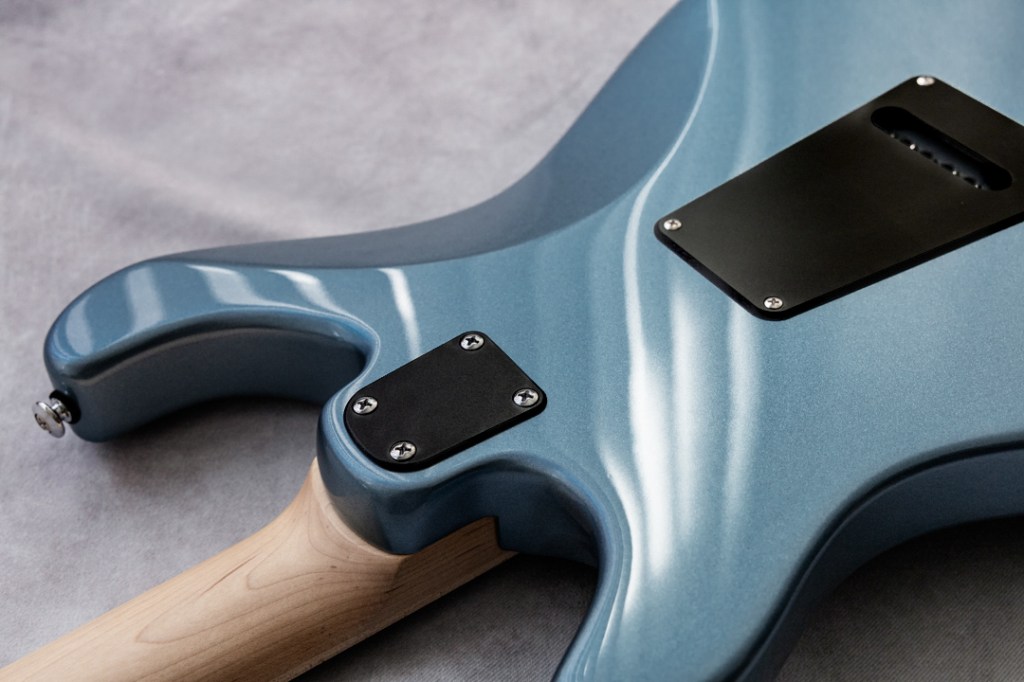
Whenever I play a Silver Sky or even a mid-tier Fender Stratocaster (around the $750 range), there’s often a sense that something is missing. But with the NF3, everything feels just right—complete, even. While it might not be the perfect guitar for everyone, I wouldn’t be surprised if it becomes a standout success for PRS. Its versatility caters to a wide range of styles and players, the neck feels wonderfully balanced, and the design manages to be eye-catching without tipping into being too flashy or too plain. And then there’s the price—more on that in a bit—but let’s just say the NF3 delivers exceptional craftsmanship and value for its cost.
The Price is Right
With a price tag of around $680 USD, depending on your location, the PRS SE NF3 strikes a sweet spot in the PRS SE lineup. While it’s not entry-level, it’s more affordable than higher-end SE models like the Custom 24 or DGT. At the same time, it sits a step above the budget-friendly $500 PRS SE CE, making it an appealing choice for players looking for great quality without venturing into premium territory. To top it off, the guitar comes with PRS’s dependable gig bag, adding even more value. Ultimately, the SE NF3 offers an excellent balance of performance, craftsmanship, and price, making it a standout option in the mid-range category.
Pros and Cons of the PRS SE NF3
Pros
- Innovative Narrowfield Pickups
The standout feature of the PRS SE NF3 is undoubtedly its unique Narrowfield pickups. They deliver a noiseless single-coil tone with higher output, blending clarity and punch while eliminating typical single-coil hum. - Versatile Tone Range
Whether you’re dialing in bright, articulate tones for funk or a warmer, humbucker-like sound for jazz and blues, the NF3 adapts effortlessly to a variety of genres. The 5-way switch offers great tonal flexibility. - Top-Notch Craftsmanship
The Indonesian-built guitar impresses with flawless fretwork, a smooth satin neck, and a precisely finished body. The build quality far exceeds expectations for its price range. - Reliable Tuning Stability
Thanks to the PRS proprietary tremolo system, self-lubricating nut, and well-engineered sealed tuners, the NF3 offers superb tuning stability, even with heavy tremolo use. - Comfortable, Player-Friendly Design
The wide-thin neck profile and contoured body provide exceptional comfort, making it ideal for long playing sessions. The smooth fretboard edges and low action enhance the overall playability. - Stunning Aesthetics
Available in eye-catching metallic finishes, the NF3 pairs its modern design with PRS’s signature elegance. The maple fretboard with gray bird inlays adds a refined touch but Rosewood is available. - Included PRS Gig Bag
PRS includes a reliable gig bag, adding extra value and protection for those frequently on the go.
Cons
- No Direct-Mount Pickups
Unlike some high-end PRS models, the NF3 uses pickguard-mounted pickups. While this doesn’t affect tone, players who prefer the sleeker look of direct-mount pickups may find this a minor drawback. - Standard PRS SE Tuners
While the tuners are functional and reliable, they lack the premium feel of locking tuners found on higher-end models. - Limited to 22 Frets
Players who prefer a 24-fret neck for extended soloing may find the NF3 slightly limiting, though 22 frets are more than sufficient for most genres. - Derivative Design
The NF3’s design closely resembles the classic Stratocaster, which may feel too familiar to those seeking something more original. While PRS has added modern tweaks, it doesn’t stray far from the iconic “S-Style” formula.

Conclusion: A New Chapter in Single-Coil Tone
The PRS SE NF3 has redefined what I thought was possible in a Strat-inspired guitar. Its noiseless, high-output pickups deliver a dynamic tone that retains the charm of traditional single-coils while eliminating their common drawbacks. The meticulous craftsmanship, flawless finishes, and thoughtful design touches elevate this guitar beyond its price range, making it a strong contender for players who want vintage character with modern reliability.

The PRS SE NF3 isn’t just another guitar—it’s a fresh take on a familiar formula, blending classic inspiration with thoughtful innovation. It excels in the areas that truly matter: tone, playability, comfort, and aesthetic appeal. From its dynamic, versatile sound to its rock-solid tuning stability and effortless handling, this guitar proves itself as more than just a Strat alternative—it’s a refined, distinctive instrument in its own right.
The standout feature, without a doubt, is the unique Narrowfield pickups. They don’t fit neatly into conventional categories, offering a tonal palette that rewards players who take the time to explore and experiment. Whether you’re dialing in clean, shimmering tones, gritty blues overdrive, or crunchy rock rhythms, the NF3 delivers in ways that feel fresh and inspiring.
Ultimately, what makes the PRS SE NF3 special is how it inspires creativity. It’s not just a well-crafted tool—it’s a guitar that invites you to pick it up, play, and discover new sounds. For someone like me, that’s invaluable. It bridges the gap between tradition and modernity, offering something that feels both familiar and entirely its own.
PRS didn’t just replicate the Stratocaster—they reimagined it. While Fender may have had all the right ingredients, it’s PRS that took the bold step of blending them into something fresh. I wouldn’t be surprised if it becomes a go-to model for countless players—and rightfully so.
Bonus Track
The star of this sonic feast is undoubtedly the Double Dish Narrowfield pickups. For a deeper dive into Paul Reed Smith’s meticulous approach to pickup and tone design, check out this video:”

 oscaronguitars.com
Leave a comment