

Jonathan Kreisberg has emerged as one of the leading voices in contemporary jazz guitar, known for his remarkable technical prowess, deep melodic sense, and inventive approach to harmony. Combining elements of traditional jazz with modern influences, Kreisberg’s sound is dynamic and complex yet deeply musical, earning him a dedicated following among jazz musicians and guitarists worldwide. His ability to blend genres, push harmonic boundaries, and create immersive, emotionally charged performances has made him a major influence in the jazz guitar world.
In this article, we’ll explore Kreisberg’s background, his influences, some essential albums, and the techniques that define his unique approach to jazz guitar.
Early Life and Musical Development
Jonathan Kreisberg was born in New York City, where he was introduced to music at an early age. His musical journey began with classical and rock influences, which he explored in depth before being drawn into the jazz world. Early exposure to a diverse array of genres gave Kreisberg a broad foundation, something that would later shape his distinctive approach to jazz guitar.
Kreisberg’s formal studies included time at the University of Miami, where he studied jazz performance. He credits this period for helping him refine his technique and his understanding of complex jazz theory. Over the years, he developed a style that brings together influences from jazz icons like Wes Montgomery, John Coltrane, and Jim Hall, as well as non-jazz elements that lend his sound a unique edge.

Musical Style and Techniques
Kreisberg’s playing is characterized by a strong melodic approach, a nuanced sense of harmony, and a sophisticated rhythmic style. His phrasing is fluid, blending bebop-inspired lines with more modern, angular ideas that showcase his versatility. Below are some of the key elements of his style:
1. Melodic Focus
Kreisberg prioritizes melody in his solos, often developing lyrical phrases that explore a tune’s emotional core. He’s known for his ability to construct memorable, singable lines even within fast-paced, harmonically complex pieces. His melodic approach draws listeners in, making his playing feel accessible yet intellectually engaging.
2. Modern Harmonic Language
A hallmark of Kreisberg’s style is his sophisticated harmonic vocabulary. He incorporates advanced concepts like quartal harmony, chromaticism, and polytonality, moving seamlessly between traditional and contemporary jazz harmony. His use of intervallic structures and surprising chord voicings adds depth and intrigue to his playing, making each phrase feel fresh and unexpected.
3. Rhythmic Complexity
Rhythm plays a crucial role in Kreisberg’s sound. He often experiments with shifting meters, syncopation, and odd time signatures, challenging the listener’s expectations and adding excitement to his compositions. Kreisberg’s rhythmic confidence allows him to create tension and release, propelling his solos forward with a sense of urgency and movement.
4. Tone and Technique
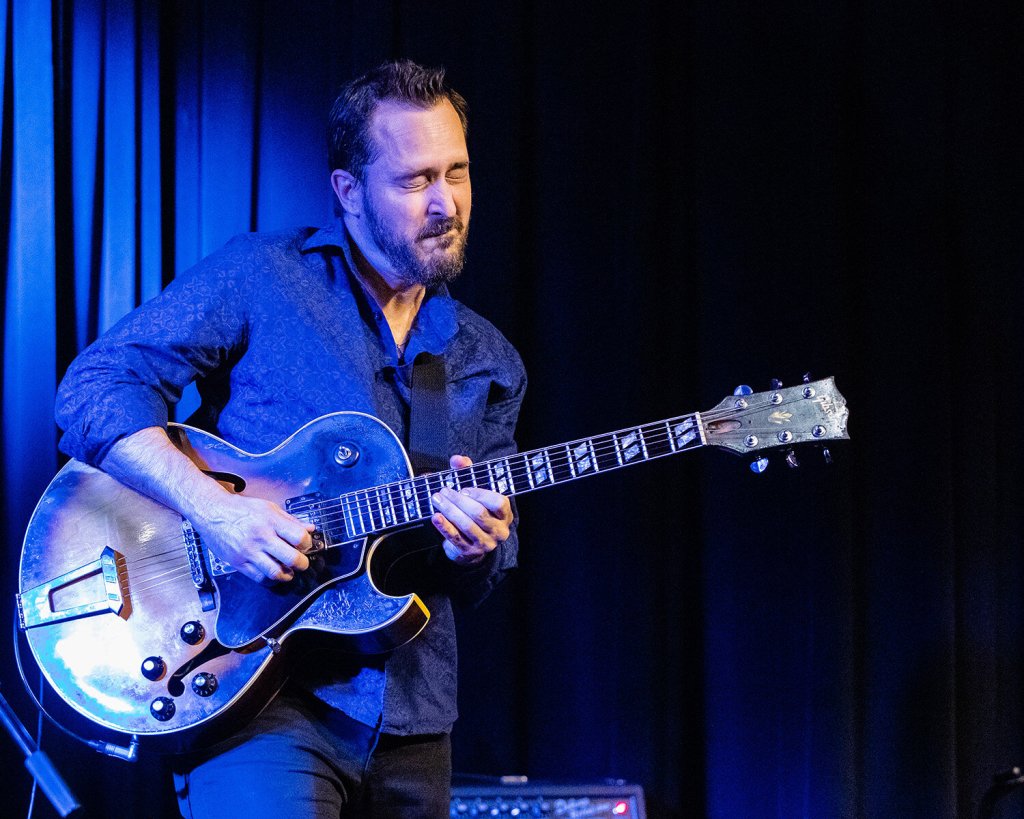
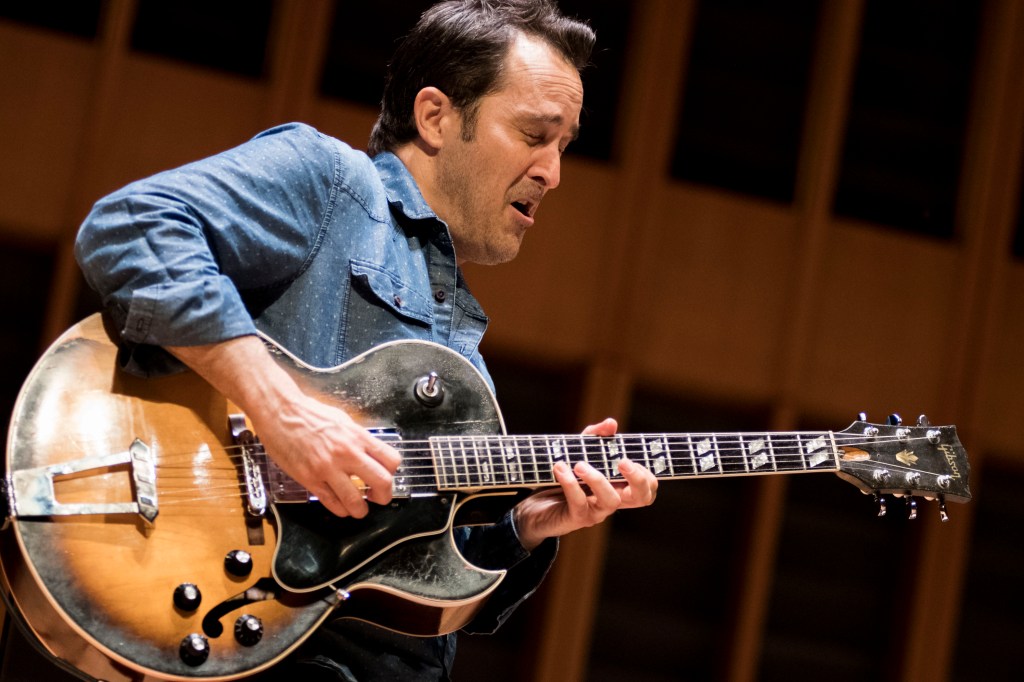
Kreisberg’s tone is clear and articulate, with just a hint of warmth. His playing is characterized by clean articulation, fast alternate picking, and a strong command of dynamics. He often uses a semi-hollow body guitar, which provides a warm, resonant tone suited to his style. Kreisberg’s phrasing is precise, and he has a deft control over legato and staccato techniques, which adds variety and expressiveness to his lines.
5. Group Interplay
Known for his ability to lock in with other musicians, Kreisberg approaches each performance as a collaborative experience. He listens intently and responds to his bandmates, creating a fluid conversation within his ensemble. This approach is particularly evident in his live performances, where his interplay with drummers and bassists creates dynamic, unpredictable moments.
Essential Albums
Jonathan Kreisberg’s discography offers a comprehensive look at his evolution as a guitarist and composer. Here are a few essential albums that capture his unique style and contributions to jazz.
1. The South of Everywhere (2007)
Often cited as one of his breakthrough albums, The South of Everywhere showcases Kreisberg’s melodic sophistication and harmonic depth. The album is full of original compositions that feature intricate solos and strong melodic themes. Tracks like “Altered Ego” and “Stir the Stars” highlight Kreisberg’s command of modern harmony and complex rhythm, offering listeners an immersive jazz experience.
2. Shadowless (2011)
This album captures Kreisberg’s continued growth as a composer, with an emphasis on storytelling and mood. Shadowless is known for its rich, dark tones and introspective compositions that blend post-bop with modern jazz. The title track is a standout, filled with haunting melodies and harmonies that push the boundaries of traditional jazz structures.
3. Wave Upon Wave (2014)
Wave Upon Wave is a more reflective album that explores themes of transformation and emotion. Kreisberg’s compositions here are expansive, often building gradually to sweeping climaxes. The album’s mix of upbeat tracks and ballads provides a well-rounded view of his versatility, with highlights like “Until You Know” showcasing his ability to craft intricate, moving solos.
4. Kreisberg Meets Veras (2017)
This collaboration with Brazilian guitarist Nelson Veras brings together two masterful players with distinct styles. The album features lush harmonies and fluid guitar interplay, blending Brazilian music with Kreisberg’s modern jazz approach. The two guitarists engage in a dialogue throughout the album, exploring themes of melody and harmony in a collaborative, conversational format.
5. Capturing Spirits – JKQ Live! (2020)
Recorded live with his quartet, Capturing Spirits – JKQ Live! offers a raw, energetic snapshot of Kreisberg’s live performances. The album highlights his ability to interact with other musicians in a spontaneous, organic way, with improvisational moments that showcase his rhythmic and harmonic creativity. The track “Wild Animals We’ve Seen” is a standout, featuring high-energy solos and intense group interplay.
Key Techniques to Learn from Jonathan Kreisberg
If you’re inspired by Kreisberg’s style, here are some exercises and techniques to incorporate elements of his playing into your own.
- Chord Substitution and Reharmonization: Experiment with substituting chords in familiar progressions. Kreisberg frequently uses tritone substitutions, chromatic passing chords, and modal interchange to add harmonic depth. Practicing these techniques can help you add unexpected twists to your solos.
- Explore Intervallic Melodies: Kreisberg often uses wide intervals in his melodic lines. Practice creating melodies using intervals like fourths, fifths, and sixths to break away from scalar patterns and add a modern edge to your playing.
- Master Time Feel and Rhythmic Flexibility: Kreisberg’s rhythmic creativity is a key part of his style. Work on shifting rhythms and syncopation by playing familiar licks and phrases in odd time signatures or displacing accents to create a sense of rhythmic unpredictability.
- Develop Melodic Phrasing: Focus on phrasing that tells a story. Kreisberg’s solos often have a clear narrative arc, with peaks and valleys. Practice building your solos with a beginning, middle, and end, using dynamics and phrasing to create emotional depth.
- Use of Space and Dynamics: Kreisberg is skilled at using space in his solos, letting phrases breathe before launching into the next idea. Practice incorporating pauses and variations in dynamics to give your solos a more conversational feel.
Influence and Legacy
Jonathan Kreisberg has become a significant influence in the modern jazz guitar world, inspiring a generation of guitarists with his technical skill and melodic sensibility. His contributions go beyond technique; his music has brought new dimensions to jazz guitar through his dedication to exploring new harmonic possibilities and his commitment to the emotional depth of his playing.
Through his recordings, collaborations, and live performances, Kreisberg has helped expand the vocabulary of jazz guitar, blending elements of bebop, modern jazz, and even rock into his sound. His influence can be seen in younger jazz guitarists who draw inspiration from his sophisticated approach to melody and harmony, as well as his fearless experimentation with rhythm and form.

Conclusion
Jonathan Kreisberg’s journey as a jazz guitarist and composer is a testament to the power of exploration and innovation in music. His work continues to inspire jazz guitarists worldwide, offering new perspectives on what jazz guitar can be. For anyone interested in pushing the boundaries of jazz guitar, Kreisberg’s recordings and performances serve as a source of inspiration and a masterclass in technique, creativity, and expression.
By studying his music, we gain insight into the art of jazz guitar and the possibilities that lie within harmony, rhythm, and melody. Jonathan Kreisberg’s legacy is still in the making, but he has already established himself as one of the most important voices in contemporary jazz guitar.



Leave a comment