
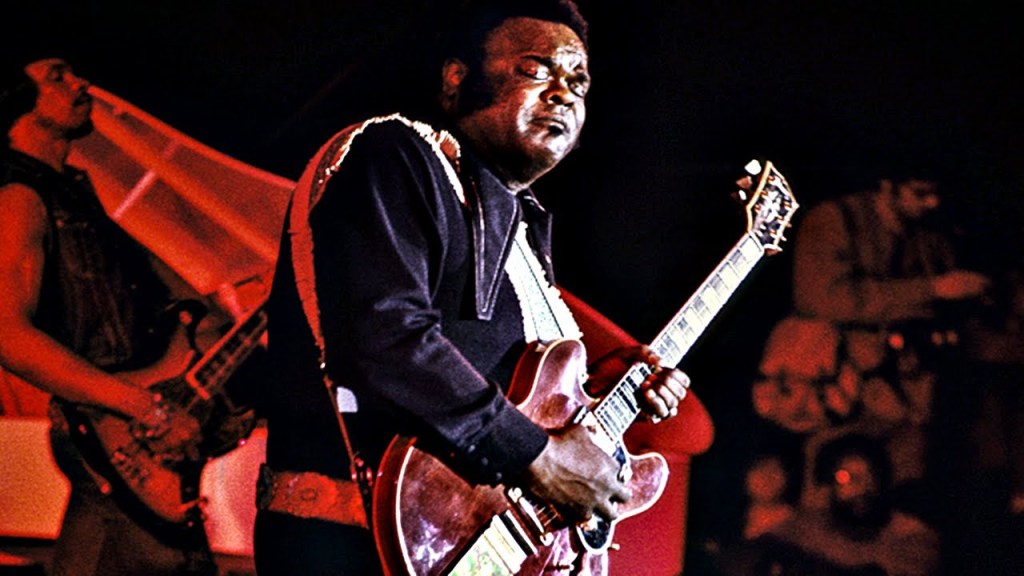
Born in Gilmer, Texas, on September 3, 1934, Freddie King wasn’t just another blues guitarist — he was a game-changer. Widely recognized as one of the legendary “Three Kings” of electric blues (alongside B.B. King and Albert King), Freddie’s explosive style, boundless energy, and pioneering crossover between blues and rock left an indelible mark on music history. This article delves deeper into his life, his groundbreaking contributions, his gear and technique, and the profound legacy he left behind.
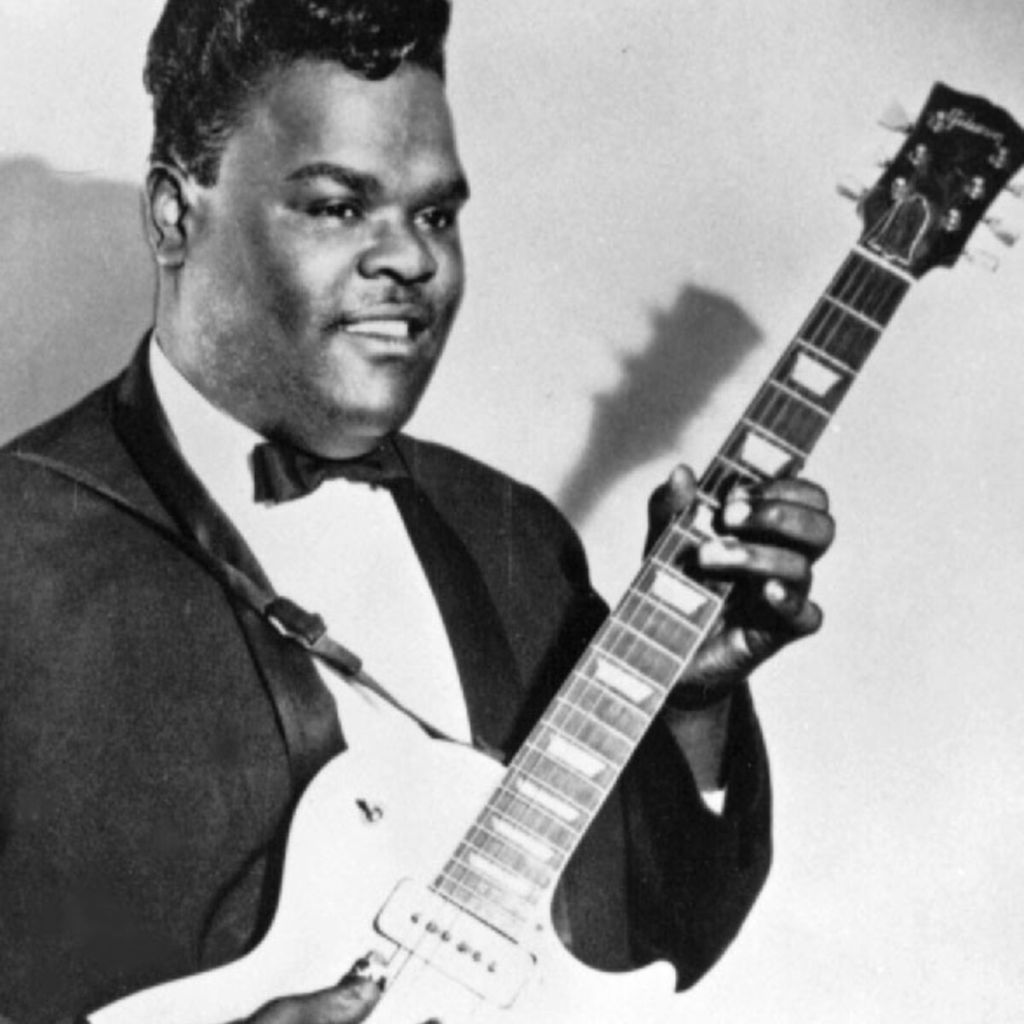
Early Life: From Texas Roots to Chicago Dreams
Freddie King grew up in a musical household, surrounded by the country blues traditions of rural Texas. His mother and uncle taught him guitar when he was just six years old, shaping his love for the instrument early on. But Texas blues wasn’t enough for young Freddie — he dreamed of the electrified Chicago sound.
In 1949, when Freddie was 15, his family moved to Chicago. There, he became a regular at the vibrant South Side blues clubs, soaking up the electric styles of Muddy Waters, Howlin’ Wolf, T-Bone Walker, and Elmore James. By blending his Texas background — known for its raw, direct picking — with the amplified urban Chicago sound, Freddie began shaping a style entirely his own.
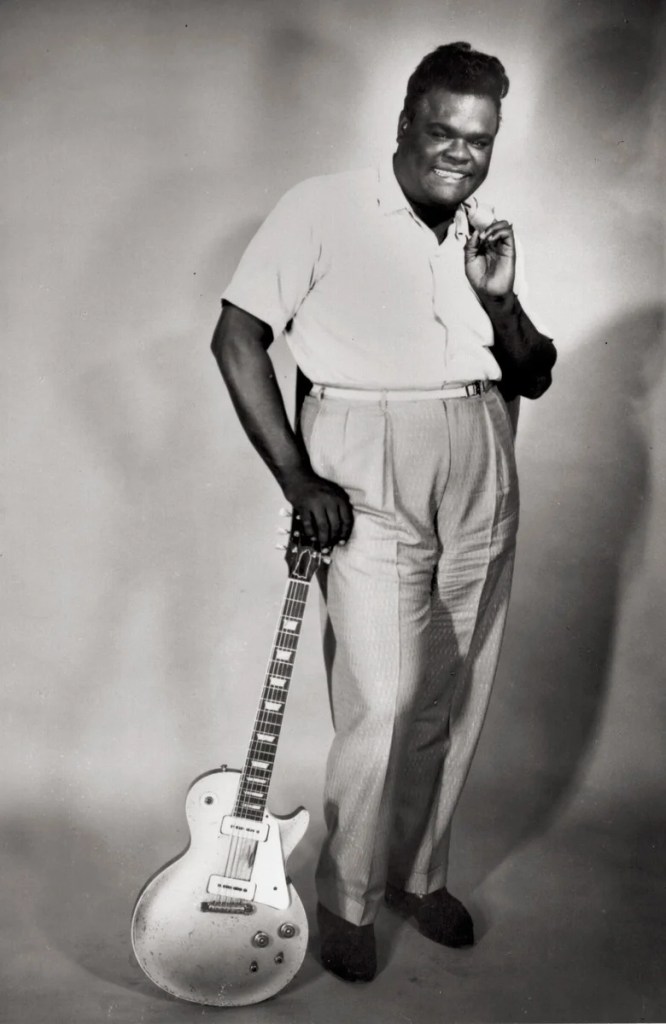
Breakthrough and Rise to Fame: The King of the Instrumental Hit
Freddie’s big break came in the early 1960s when he signed with Federal Records. His 1961 instrumental “Hide Away” became a massive hit, not just in blues circles but on the broader R&B charts — an extraordinary achievement for a blues guitarist at the time. Named after Mel’s Hide Away Lounge, a Chicago blues club Freddie frequented, the song became a standard, covered by everyone from Eric Clapton to Stevie Ray Vaughan.
Other standout instrumentals followed, like “The Stumble,” “San-Ho-Zay,” and “Sen-Sa-Shun,” each showcasing his fiery guitar runs, stinging bends, and fat vibrato. These tracks weren’t just technical exercises; they were danceable, catchy, and brimming with personality, opening the door for blues guitarists to gain wider popularity.
The Sound of Freddie King: Gear and Technique
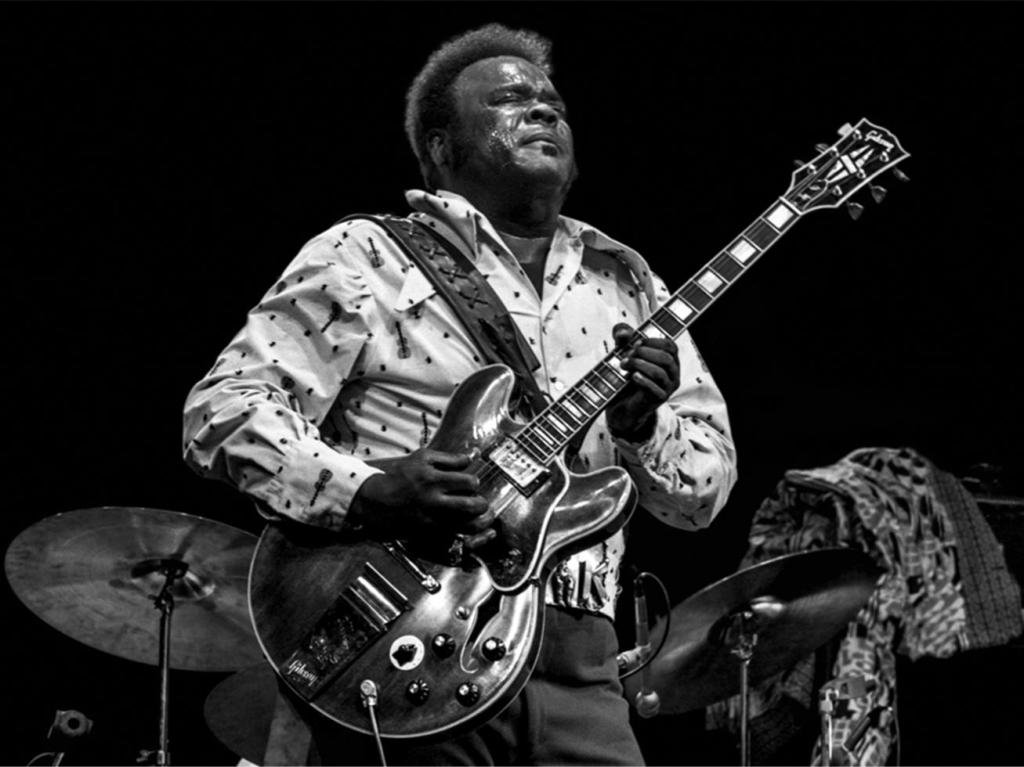
Freddie King’s guitar tone was as unmistakable as his towering stage presence.
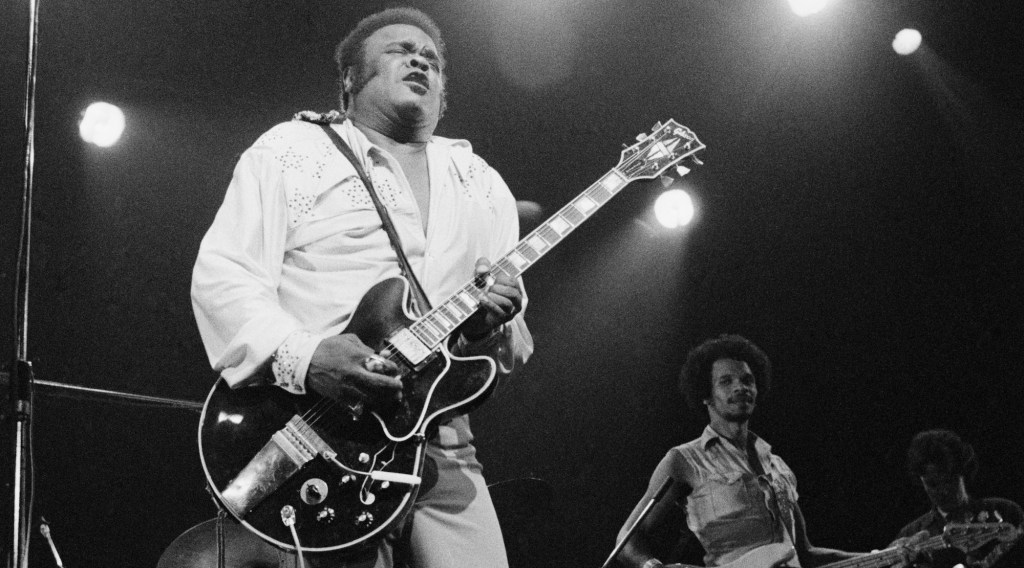
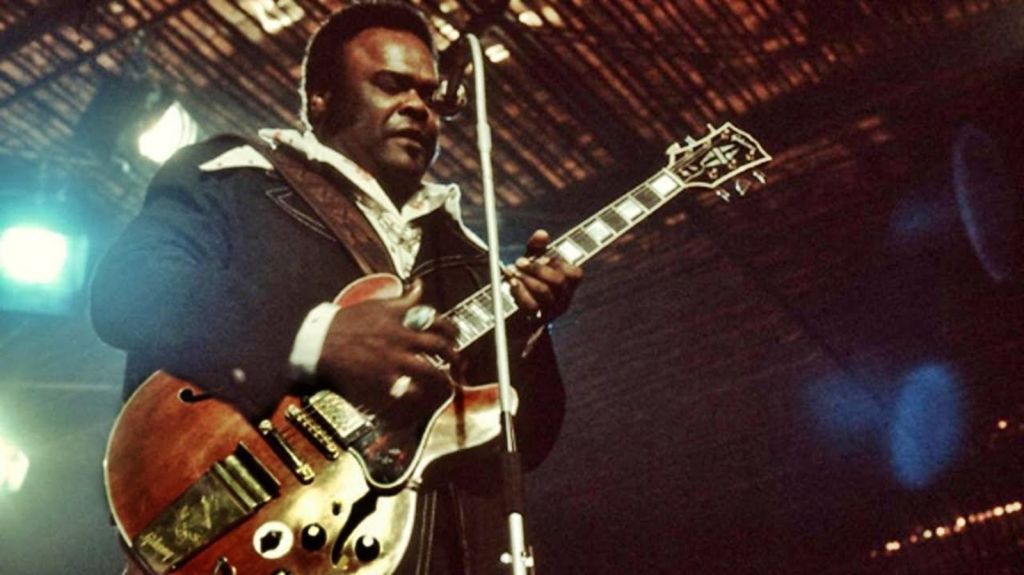
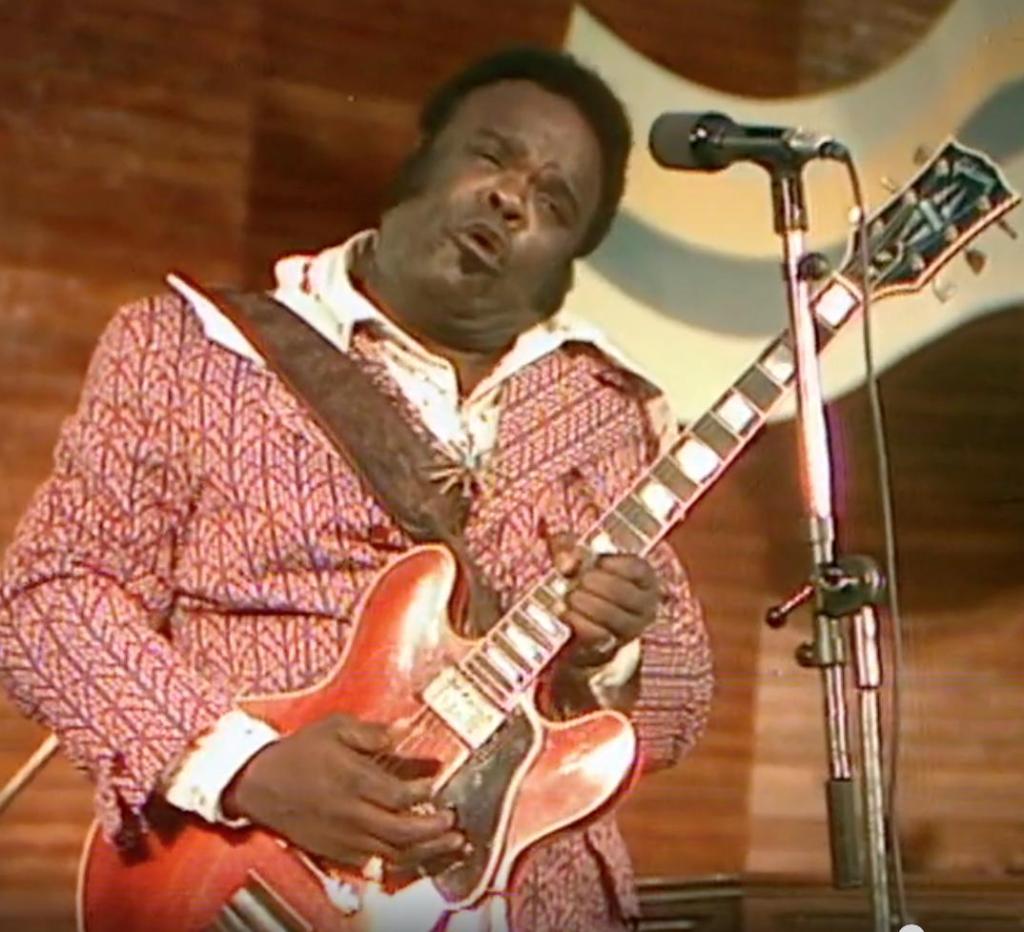
- Guitars: Freddie started out with a solid-body goldtop Gibson Les Paul, later moving to semi-hollow Gibson ES-345 and ES-355 models. The semi-hollow body gave his tone more warmth and resonance, which paired beautifully with his aggressive attack.
- Amps: He famously ran his guitars through a Fender Quad Reverb amp — a powerful, clean-sounding amp that could deliver both sparkling highs and muscular lows, perfect for cutting through noisy clubs and big halls.
- Technique: Freddie was a master of thumb and finger picks, giving his right-hand attack a crisp, articulate snap. His left-hand vibrato was wide and expressive, and his bends were full of emotion. While some blues players leaned heavily on vocal phrasing, Freddie made his guitar sing, often carrying instrumental melodies that were as memorable as his vocals.
What set Freddie apart wasn’t just the notes he played — it was the sheer energy behind them. Whether on a slow burner or an uptempo shuffle, his playing was always urgent, raw, and thrilling.

Blending Blues and Rock: A True Crossover Pioneer
While B.B. King embodied a smooth, jazzy sophistication and Albert King had a raw, cutting sound, Freddie King’s style was something else entirely — ferocious, electrifying, and tailor-made for the emerging rock generation.
By the late 1960s and early 1970s, white rock musicians in the U.S. and U.K. were discovering the electric blues, and Freddie was a key figure in this cultural crossover. His high-energy shows, blistering guitar licks, and rock-friendly vibe made him a favorite among young guitarists like Eric Clapton (who famously covered “Hide Away” with John Mayall’s Bluesbreakers), Jeff Beck, Peter Green, and later Stevie Ray Vaughan.
Freddie wasn’t just content to stick to the blues circuit. He toured extensively with rock bands, performed at major festivals, and recorded albums that leaned heavily into blues-rock, helping to shape the sound of guitar-driven music in the 1970s.
Iconic Tracks and Albums
Freddie King’s catalog is filled with unforgettable recordings, but a few stand out as essential listening:
- “Hide Away” (1961): A defining blues instrumental that became a template for blues-rock guitarists everywhere.
- “Have You Ever Loved a Woman” (1961): A searing, emotional blues ballad that shows off his soulful vocals.
- “The Stumble” (1961): An instrumental filled with dazzling runs and clever phrasing, still a favorite among blues players today.
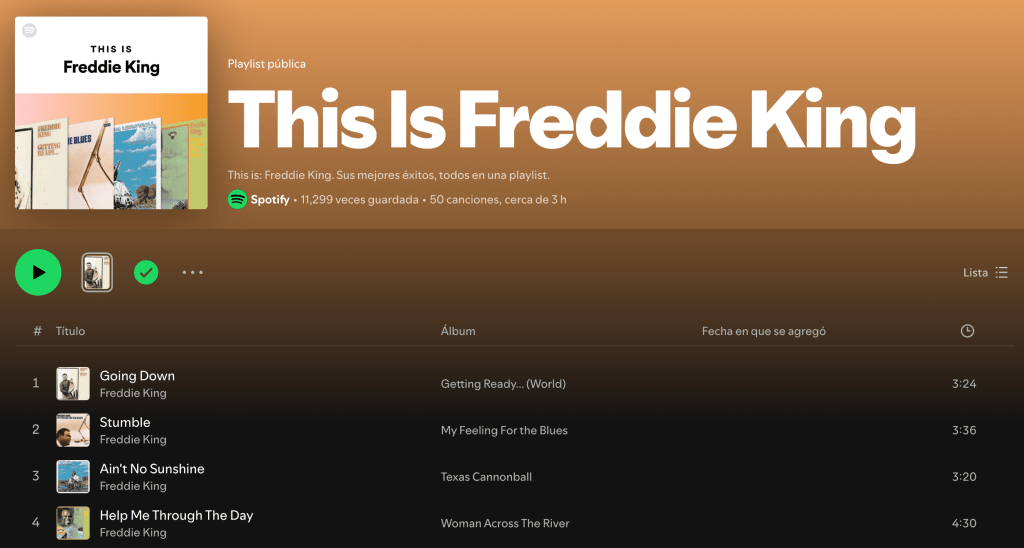
- “Going Down” (1971): A hard-driving blues-rock anthem covered by countless artists, from Jeff Beck to Joe Bonamassa.
- “Tore Down” (1961): A rollicking, uptempo blues shuffle with scorching guitar fills and infectious energy.
His albums, including Let’s Hide Away and Dance Away with Freddy King (1961) and Texas Cannonball (1972), are pillars of electric blues, blending raw talent with sharp production.

Influence and Impact on Music History
Freddie King’s influence extends far beyond his recordings. Here’s how he reshaped the musical landscape:
- Influencing British Blues-Rock: Bands like Cream, Fleetwood Mac, and The Rolling Stones were deeply influenced by Freddie’s repertoire. His instrumentals became standards for aspiring blues-rock players, and his guitar style shaped the vocabulary of modern electric guitar.
- Shaping Texas Blues: Freddie’s blend of Texas and Chicago styles laid the groundwork for the Texas blues-rock explosion, paving the way for artists like Stevie Ray Vaughan, Billy Gibbons, and Jimmie Vaughan.
- Stage Presence: Freddie wasn’t just a guitarist — he was a performer. His high-energy shows, charismatic presence, and ability to connect with audiences set a new standard for blues artists looking to break into larger venues.
- Bridging Blues and Rock: By actively touring with rock bands and leaning into a heavier, louder sound, Freddie helped keep the blues relevant in an era when rock music was dominating the airwaves.
Challenges and Late Career
Despite his musical success, Freddie King faced numerous challenges. Years of relentless touring took a toll on his health, and the music industry often failed to provide the financial rewards his talent deserved. Yet even as the years wore on, his passion for performing never dimmed.
In the mid-1970s, King signed with RSO Records and released several well-received albums, including Burglar (1974) and Larger Than Life (1975), showing that even late in his career, he was still pushing boundaries.
Tragically, Freddie King’s life was cut short when he died on December 28, 1976, at just 42 years old, from complications related to stomach ulcers and pancreatitis. His early death robbed the music world of a true original, but his legacy was already cemented.
Honors, Recognition, and Legacy
Freddie King was posthumously inducted into the Blues Hall of Fame in 1982 and the Rock and Roll Hall of Fame in 2012 — well-deserved honors for an artist whose work influenced generations of musicians.
His daughters continue to promote his musical legacy, keeping his recordings alive and ensuring that new generations discover the power and passion of Freddie King’s blues.
Today, Freddie’s music remains a staple in the repertoires of blues and rock guitarists worldwide. His recordings are studied by guitar students, covered by rock bands, and celebrated by music historians as some of the finest examples of electric blues ever recorded.
10 Fascinating Facts About Freddie King
- Nickname: He was affectionately known as the “Texas Cannonball” for his explosive playing style.
- Early Start: Learned guitar at age six from his family in Texas.
- Musical Heroes: Idolized guitarists like T-Bone Walker and Lightnin’ Hopkins.
- Stage Showman: Famous for his blistering live performances, often breaking guitar strings mid-show and playing on undeterred.
- Rock Collaborations: Played with rock legends like Eric Clapton and Leon Russell.
- Racial Barriers: Helped bridge the racial divide in music by playing integrated shows with white rock bands.
- Guitar Idol: A key inspiration for guitarists in both blues and rock, including Stevie Ray Vaughan, who cited him as a primary influence.
- Pioneer of Blues Instrumentals: Helped establish the blues instrumental as a commercially viable format.
- Blues-Rock Innovator: Pushed the blues into heavier, more rock-oriented territory without losing its emotional depth.
- Lasting Legacy: Even today, Freddie’s songs appear in films, TV shows, and are staples on classic rock radio.
Conclusion: The Enduring Power of Freddie King
Freddie King’s electrifying guitar work, soulful vocals, and genre-blending spirit transformed the landscape of blues and rock music. His recordings are a blueprint for modern blues guitar, his live performances are the stuff of legend, and his influence reaches across decades and continents. While his life ended too soon, his music remains timeless — a living, breathing force that continues to inspire, excite, and move listeners around the world.
 oscaronguitars.com
Leave a comment